I came in today thinking Field would start today. Turns out it starts tomorrow. So I decided rather than just going home to try to act the part of a dedicated student and continue with my project as if I meant to continue it. I wanted to continue my various projects after deadline last year but never did. But If I’m going to because a real animator I’m going to have to try to up my dedication and keep trying even when people aren’t telling me to do things. I’ve only recently begun to realise how co-depeant I am.
The next piece of work I had to do was the pond ripples scene. It’s one of the longest parts of the animation and the raindrops are timed to the music. I timed them in Premiere myself.
I opened up the program and looked at the timeline. Now this next bit is important. I cut off all the animation before the pond ripples so the timer on the ripples and would be set to zero. Making the maths simpler. Neil had don’t the same thing for me when I was doing the daylight raindrops.
I cut the extra bits off. Pulled out an X sheet and started working out the timing. Hoping to get to grips with this all important part of the animation process.
I worked at this all day. Doing the timing. Seeing where the keys overlapped with each-other. And trying to keep it consistent.
I filled out four X sheets. But just when it was over I decided to listen to the animatic again. And the visuals and music were out of sync! I’d somehow shifted the visuals and music markers so they were misaligned! I’d spent the whole day writing the wrong information. The X Sheets I’d spent all day makinging were worthless!
This really hurt. I hope I can learn something from it at least. From now on I will keep this mantra as part of my notes
“When timing to sound always check and recheck the sound and images are in sync. Always! Always!!! ALWAYS!!!!!!!”
Let’s get something straight. I hate writing these journals.
I’ve complained in the past that writing about being on an art course while trying to complete said course is like trying to write a dissertation on tightrope walking while walking on a tightrope. Counter intuitive.
But this time it’s been worse than ever. I’ve spent more time writing about my work in the past week than I actually have working! If I was a tightrope-walker I’d still be back at the ladder typing about what I was about to do while the audience got bored beneath me.
So what has happened that I can learn from and talk about?
With my format decided for me all I had to do was get to work. But with very little time. I talked the Morgan (Who will come up a lot in this journal) about what I could do in the time I had. We agreed I’d save time by using second long animation cycles and and boils (cycles of two or three near identical frames of animation used over and over again to give the illusion of a still image without it looking flat and lifeless). So I could animate more. However Morgan insisted for the first few drops of rain to sync them to the first few piano notes. I baulked at the Idea. I haven’t animated to sound of any sort since 2010. I wanted to do everything either to a cycle or make it a “Moving Background”. That’s apparently when you draw a whole image over and over again to give the illusion of a camera moving. That’s not way I wanted to use it. It’s just that that a lot of the sequences that couldn’t be cycled like a ship cresting a wave
were basically an object moving in a straight line from left to right or right to left. Perfect for animated backgrounds. But those would be very time consuming. Hence the need for cycles and boils to balance things out. Even working at the miniature scale I mentioned in “What I’ve done so far”https://johnhawk.art.blog/2019/11/04/what-ive-done-so-far/ I would have very litttle time to do this work in. So I’d need to cut corners where I could.
I chose to work solely with my coloured pencils. Sticking to one medium would keep me focused and save time.
I made keys for all the sequences so I could make the whole thing if I had time.
It felt good to be back at the animator’s easel and lightbox. Thanks to having done these thumbnails I was able to draw the keys effortlessly. It took time. But I don’t remember it being hard the way drawing normally is. Some of them even came out fantastic. Looking like miniature works of art.
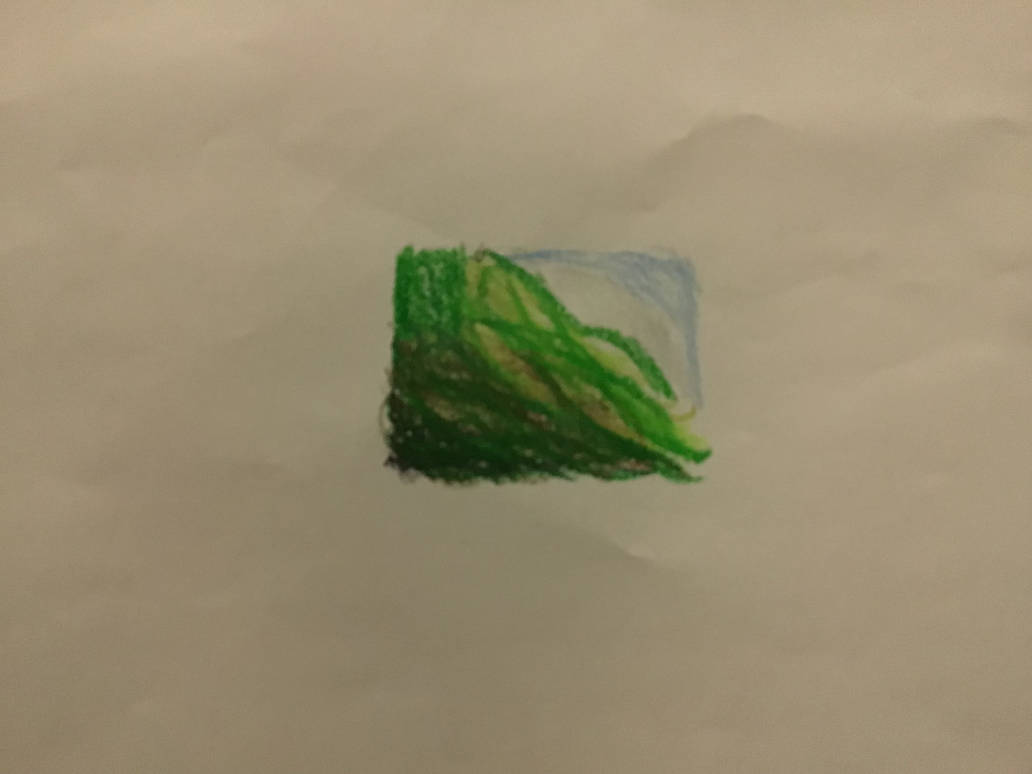
I only varied off using the colour pencils for the river plants one. Using crayons instead.
I think the choice was justified.
I had all I needed to make the whole thing. I got very little of this actually done. I won’t make excuses for myself. There are things I could have done better. All the problems I mentioned in “Why am I so bad at this?”https://johnhawk.art.blog/2019/11/04/why-am-i-so-bad-at-this/
I came in everyday and stayed in late. Forcing myself to keep working even when I felt like I was dying.
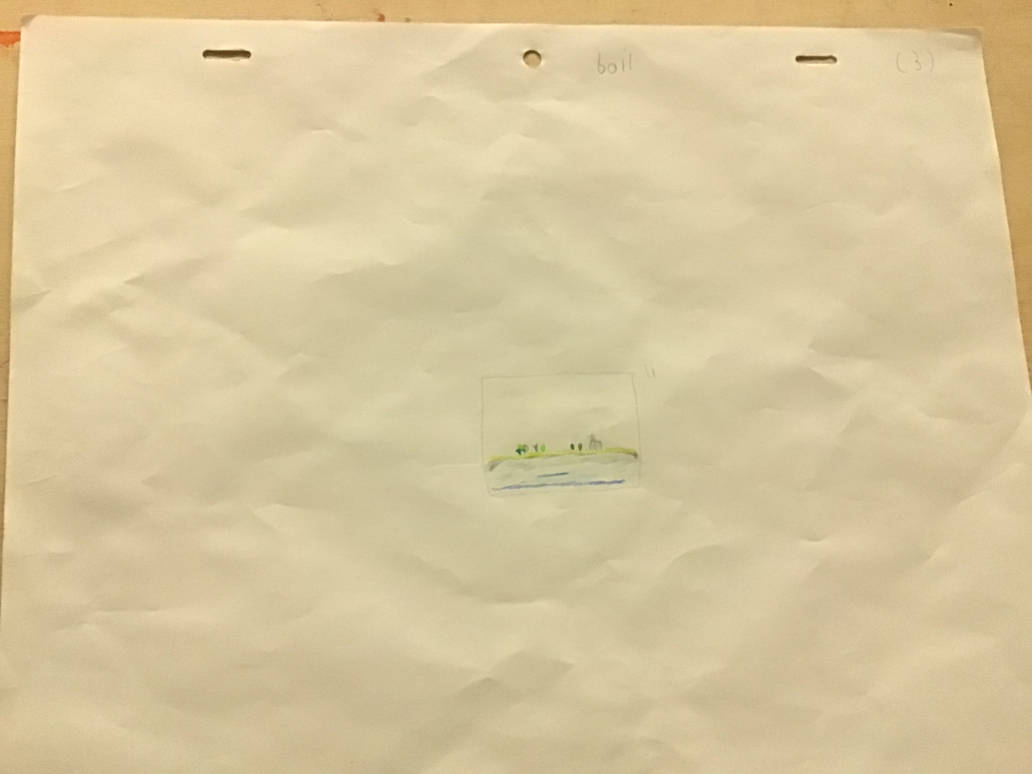
I started with the boil for the daylight raindrops
And when that was done I started making the rain cycle
Once again I decided to animate on 3s. The industry minimum. It meant I could have second long cycle in eight drawings. Considering I already had two keys for this cycle it would only take six drawings. What a way to save time.
I found the darker colour of the raindrops made things a bit a bit hard to follow I’d sometimes draw raindrops in the wrong frames. And erasing or covering over things in coloured pencils is not easy.
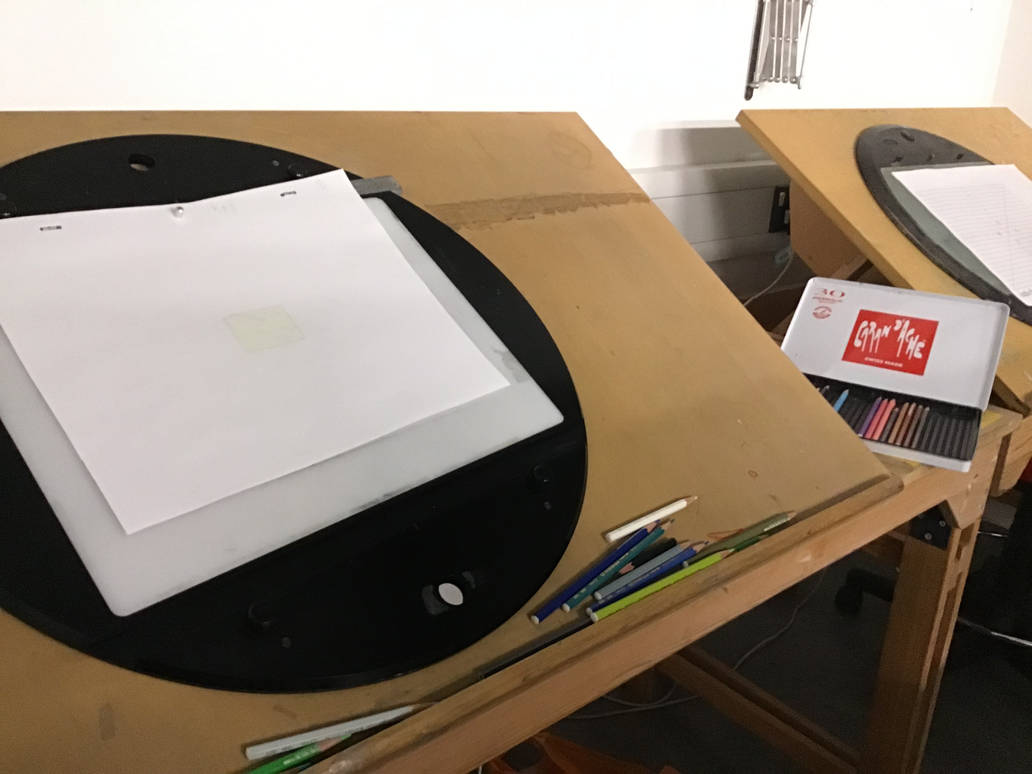
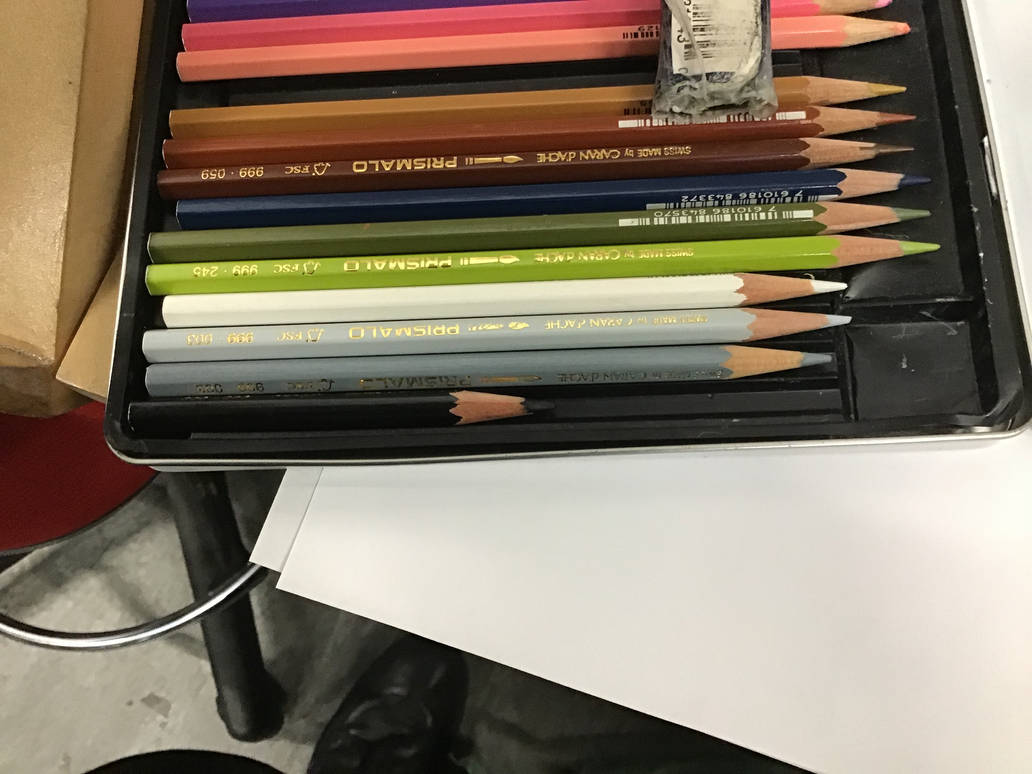
I realised putting the pencils back in the box every time I finished using one was wasting time. I needed a system. I selected all the right colours and kept them in on the desk under the animator’s disk.
Not only did this cut down on time reaching over to my pencil box over and over again, but it meant I HAD to pick a limit on the colours I used. I found that it was a good way to keep my work focused. And it probably mad the art better too.
The cycle was bit tiring. Before I did the lead-in to the cycle. The first few raindrops. I would do the moon scene first.
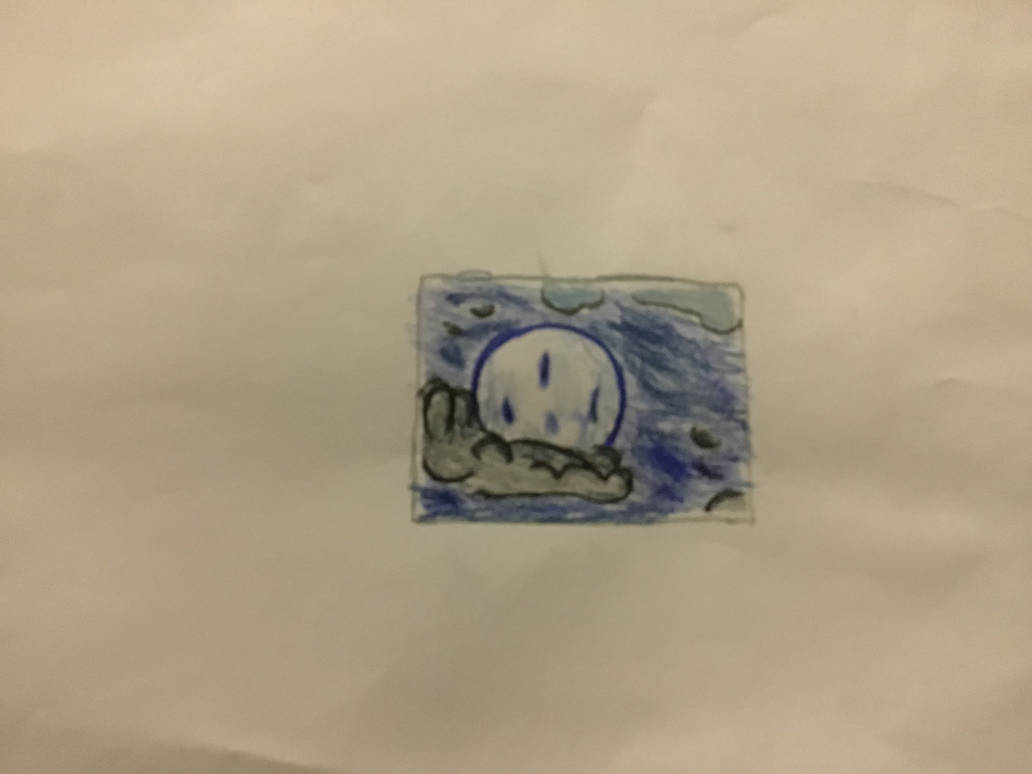
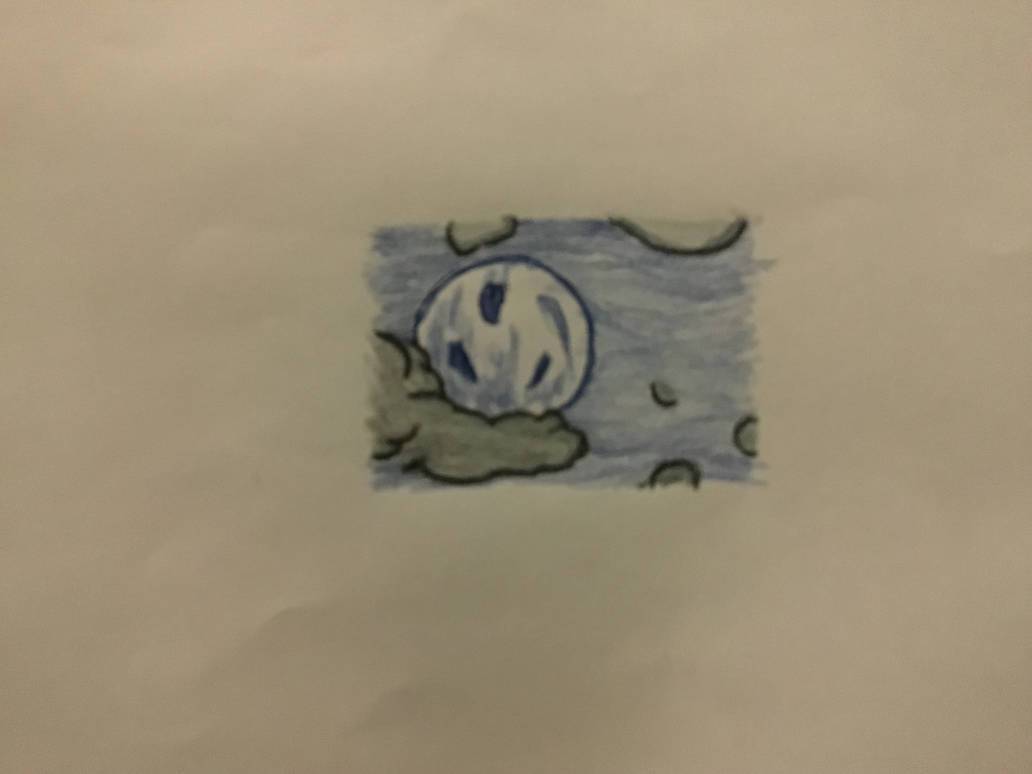
I pulled out the keys I made and made an in between. And I realised that I couldn’t see any of the things I was tracing because the colours were too dark. I came up with a solution. I’d animate the moon and clouds moving with pencil drawings
And then I’d trace over the pencil drawings to make the actual animation. Effectively animating and then inking on my own. Something most classical animators never did.
But to save time I’d animate on 5s. I knew that would look bad. 3s is the industry minimum. If something is on screen for 4 frames of more it will look static to the viewer. I knew what i was getting into. I did a cycle of waves crashing against a cliff on 5s last year. I knew it would look janky. I just hoped the fact the moon was moving very slowly would counteract this. It didn’t. in fact I think it hurt the illusion of any movement except the end. I actually the the waves from last year looked better. I think the reason for that is then I was making small objects move across a large amount of space. Here I was making a large object move across a small amount of space. I guess that made things choppier perhaps? Maybe I should make sure that objects moving slowly have a higher framerate? One thing I know didn’t have was despite all my best efforts I couldn’t keep the placement consistent. The scale meant I didn’t have enough room. That and the lines being too thick to keep it easily on track. it was still probably my fault in the end. But the odds were against me.
I did learn somethings though.
The keys for made the moon had multiple shades of blue in the sky.
This looked nice. But it was time consuming and I hadn’t gotten the balance right. So I downgraded to one type of blue. And I think it looks okay.
I also think my linework and understanding of lighting got better when making this. All the right details are in focus and the that moon sure looks bright. i was also able to phase out some extra details tat weren’t needed. Making the piece look better and quicker to animate. If I want to keep making this type of animation I’m going to have to refine both these skills.
So no, while the moon animation didn’t come out good I don’t regret making it. It was a learning experience.
I may also try animating on fours in the future. Just to see if there’s a way of getting an okay result with them.
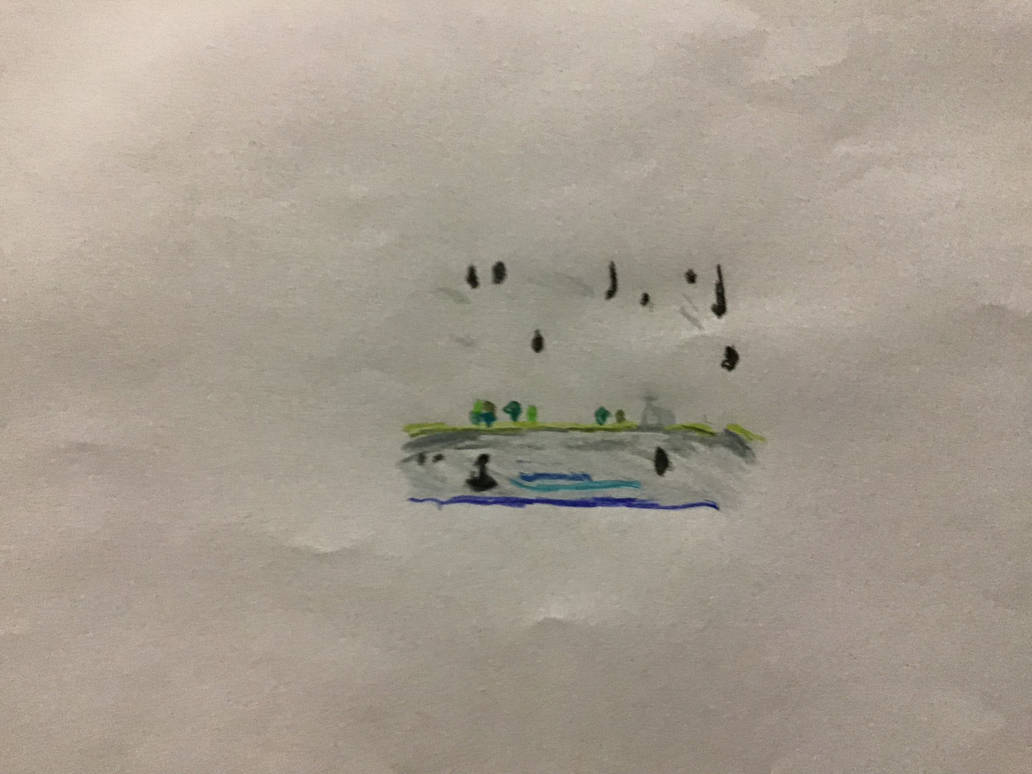
I know had to do the lead in raindrops for the cycle. and something in me just caught fire. I told Morgan I wanted to animate them to sound.
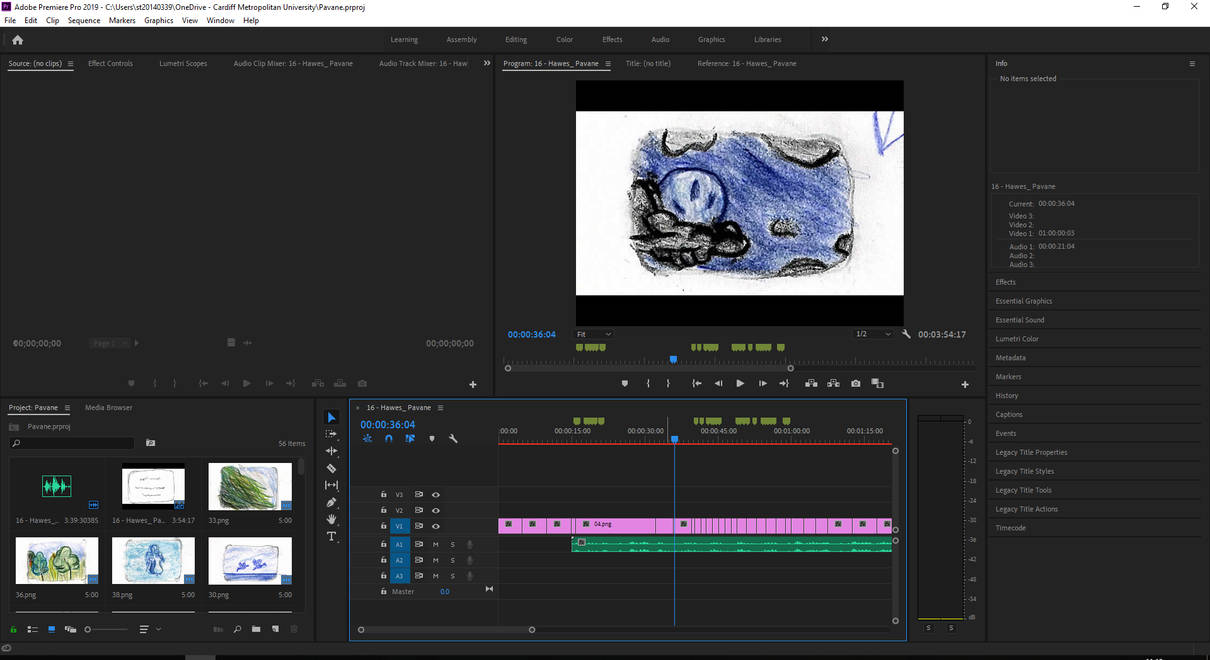
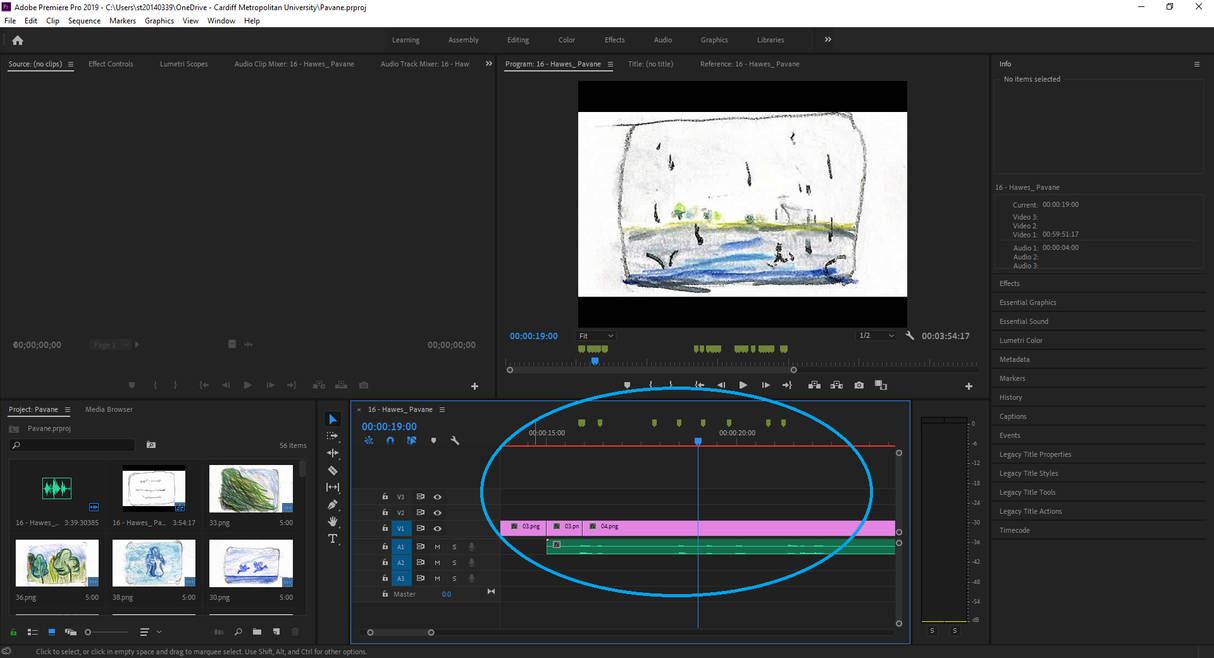
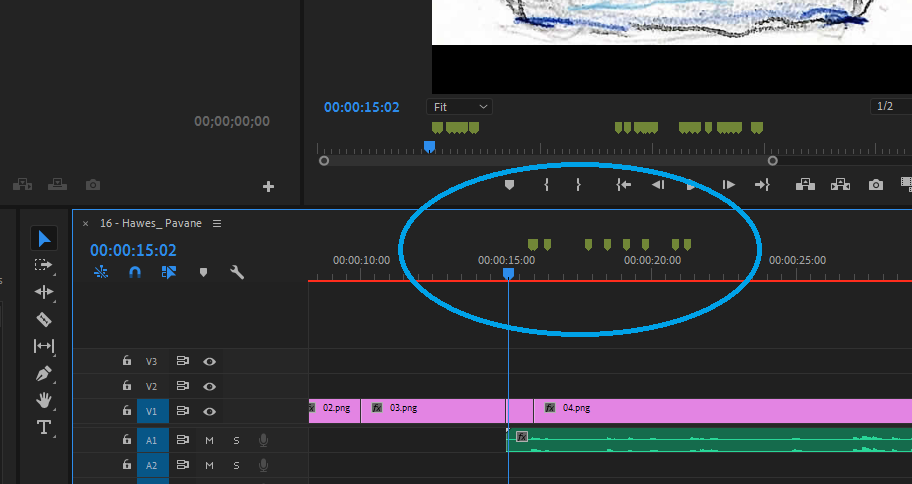
We opened premiere and used a neat little tool to find out exactly what frame in the animatic each note landed on. Here’s what it looks like
The green arrows tell me where the notes are
Useful eh? Morgan says back in the old days they’d
So I had nine notes (It looks like eight because the first two are very close together) to animate as single raindrops as the rain started. We pulled out an old fashioned X-sheet
to figure out where all the frames would go. The nine notes would be the raindrops hitting the water. And I’d animate the raindrops falling and splashing around those pics. Any extra frames with no rain would be filled with the bail frames.
I’d animate this on 3s, moving into 2s or 1s whenever the raindrops separate raindrops or splashes overlap with each other (Which happened a fair bit).
Making this felt good. Animation is intoxicating because when it gets challenging you feel like you’re using all of your brain. every action feels like it has weight and purpose to it.
I’d animate the raindrops first, and then draw the background behind them. And I think I genuinely started to get better at working with coloured pencils. I was able to use light touches, soft blends, hard lines, and focuses with more intent and precision. Making frames that had more visual structure and appeal than I normally do. I was also able to use the scaling down of details i’d discovered on the moon sequence to simplify the drawing and work faster a tiny bit. Though I could have done better there.
It took me long time. Not helped by all the writing I had to do on the side (Actually the course demanded I do more writing than drawing at this point). But I got it done.
I must thank Morgan for finding a camera lense that could film these small drawings close up and still get good lighting. And for filming my work while I was still writing and drawing like a madman.
I’ve barely eaten or slept this week. My last real meal was breakfast on Monday (BTW. The cooked breakfasts they serve here are excellent). I think I’ve given it my all.
Yesterday Morgan and I sat down to film the Raindrops start. Morgan seemed to be baffled and horrified by the timing I’d drawing up. Animating on 3s is strange enough to him being old school and never going below 2s (If only I had such lesure). But jumping from 3s to 2s to 1s and back again seemed like black magic and pure stupidity to him. But I felt i knew what I was doing. I had to.
We filmed the rain starting and the rain cycle. And it was the most beautiful thing I’ve ever made.
Ever since I decided on pursuing animation I’ve wanted to make pure hand-drawn animation. Drawing everything in the frame each time. Giving it the fluidity and sparkle and life that only this kind of animation has.
My main inspiration was the work of the Illuminated Film Company. Who would do the best to capture the look of hand drawn picture books in animation, And they would often completely hand draw everything for characters, or even whole shots. I love the living, breathing, magically quality this gave their animation. Especially on the film Grandpa
The whole world feels alive in this animation. Not even Disney animation has this kind of vibrancy to it.
Grandpa was based and book by John Burningham. A man with a very sketchy style
The fact they were able to almost recreate his style in animation amazes me. Morgan says that must have done it using cels and a certain type of pencil. Hopefully I can try this technique some day.
Illuminated used this technique in a more refined and beautiful, but more restrained style in their most famous film The Snowman.
These are the biggest influences on my style. But I was also inspired by the backgrounds and some of the animation details in The Angel and the Soldier Boy.
See the ship on the sea at the time code 1:09 to really see how stunning this film looks at it’s best.
I think this type of animation has the same human element that makes stop-motion so appealing and more. It feels beautiful and mysterious.
Over time I found independent animators who would do even rawer work without cels at all. Just pure animation for every frame.
Animators like Fredric Back. Who’s film ‘The Man Who Planted Trees’ may be the most beautiful animation ever.
Or British animator Karren Kelly Whose work has a strange energy to it.
And it goes without saying that these works not only determined what type animation I would make and what I’d make it with. But how I’d draw it to begin with.
When I finally saw MY pure hand-drawn animation I was, for the first time, amazed by my own work. And I am not ashamed to show it next to my influences. I’m not on their level yet. But When I saw my raindrops falling for the first time I KNEW this was exactly the type of animation I want to make for the rest of my life. Nothing will ever be as good to me again. I hope in time I can incorporate the strengths of all these influences into my animation.
I only have 25 seconds of real animation. But here is my mission statement. Here is the sort of animation I want to make.
I think I did well.
And at Morgan’s insistence, here is the verion with the animatic after the animation runs out
And here is the animatic in full.
Editing this thing was complete hell. Even worse than usual. It took most of the day. Without Morgan and our computer expert Neil I would have been totally lost. It feels like Adobe Premiere was made just to make people’s lives unbearable. The worse it got the more I feel certain that I was right in choosing to work analogue. It means I have to put up with as little of the BS as possible.
My thanks once again., To Neil for making Premiere useable. To Own for believing in me. And To Morgan for everything.
Now I need a shower and a shave. Maybe something to eat too.
People make art for many reasons. For a cause, for money, for therapy. As a time waster, as a way of expressing one’s self, as a private expression, for company, to preserve memories, as a way of bonding with others, or just for sheer beauty. But the inalienable fact is that people make art. Art does not appear out of the ether or grow on trees. People make art. But I feel sometimes we forget this. We subconsciously think of art as something that manifests into the world through its own magnificence. Complete in its vision of itself. When I show people works I have made people assume the thing on page is exactly what was in my head. The opposite is normally true. When I see one of my own works what I see is 50% my own limitations of skill, 49% mistakes, and 1% my vision.
There are two schools of thought on how to treat art that are as opposed to each other as they both tyrannical. The Death of the Author. Which states that anyone’s take on the work is a valid as the creator’s. Which in practice means the critic doesn’t have to listen to facts and reason. If someone wants to say that The Lion King is a vicious character-assassination of the poor they don’t have to care about what the actual point of the filmmakers or what actually happens in the film (Timon and Pumbaa are not only “poor” in as much as wild animals can be but they don’t even own land. Making them poorer than Hyenas. And the “Rich/poor” divide is at best a minor theme in the movie). The fallacy of Death of the author is “The Author’s take on their work is just as valid as anyone elses, no more or less” this argument ignores that having facts will make your take more or less valid. And with the exception of Stephen King on Cujo the author always has more facts about the work than anyone-else (King was suffering from drug addiction at the time and claims to have no memory of writing that book). Normally once someone has taken Death of the Author to heart they will only accept their own take on the work. Having disposed of the person who knows the work best they have no reason to listen to anyone-else. They are right by virtue of being right.
The other idea that is just as dictatorial is the maxim “There is no art. Only artists!” That the artist is the true work of importance and the work is just a vehicle to promote the artist. An artist can declare anything to be art and said art about whatever they say it is with little work put into making the work speak for itself. The work only has value because the artist made it.
I call both these terms dictatorial and tyrannical very deliberately. These two philosophies put their respective beneficiaries on a god-like pedestal. The Critic or the Artist can now perform alchemy and turn one substance into another at will. The critic can declare a work about anything they want and all must bow down to them. The artist can make anything art and cannot be challenged or told they have failed. One speaks divine truth, the other is divine.
And make no mistake. These two concepts are at odds with each-other. When people tried to reinterpret Duchamp’s over-discussed urinal as a statement about the beauty of forms in “dirty” objects, calling it a “Buddha of the Bathroom” Duchamp was furious. His work was meant to be read in the way he intended and nothing else.
I have many problems with both these outlooks. But one thing I’d like to point out is how both of them somewhat erase the idea that art is something that is made, over time, with human effort and human error.
The critic treats the work as if it just appeared out of nowhere. Exactly as it was meant to be. The postmodern artist cannot afford to admit to any flaw or failure for fear of their magical aura fading away. And many modern artists don’t even make anything at all. Some just find objects and claim they have made them art or just have abstract thoughts can call them art. Art as something that is made by human hands over time is something that is being obscured by these ideas.
The way people make art is rarely discussed beyond maybe the most technical details. Perspective, two-thirds framing, colour theory. That sort of thing. But the way people go about making art as shown in books and movies is almost comical. The artist will either be lying on their sofa despondently or making a frustrated, impotent attempt at making a failing piece work. And then inspiration strikes them and in a manic display of energy they start making the work flawlessly. And the end result is exactly as they envisage it.
Maybe this is more proof of my incompetence than erroneous presentation, but in my experience it’s nothing like that at all.
Making art isn’t a transfer of an idea straight into the physical world. It’s a journey.
There are three phases in making a work of art. The mental, the Physical, and finishing the thing. Let’s start with the physical.
For the sake of good faith I must point out that a lot of what I write is based on my work in animation, which is what I’m studying. It may have biased me in some areas. But I have limited experience with writing, painting, metal work, photography, and most importantly sculpture, which I almost chose over animation. I feel all the things I say here are just as applicable to them as they are to animation.
Making art is tiring. It doesn’t always involve a lot of movement. But it can wear on your body. I’ve flopped down on my bed exhausted after working on pieces. That’s rare, but it does happen. And when you get tired it will affect the quality of your work. Sometimes it makes it better, normally it doesn’t.
While getting tired is rare I have on other occasions gotten my fingers or fingertips sore from sculpting work, my eyes tired and arms sore after life drawing. And it’s not uncommon after a lot of work for one’s head to feel heavy and sore. Like huge chunks of one’s brain have been replaced with sand. When any of these things happen it’s often best just to give up and go home for the day. You’re not getting you’re peak back today (Though I’m guessing many professional artists just have to work in this state or risk losing money. I hope when the time comes I will stand my ground).
Everything you do has limits. God only knows how different all the classic art works would have been if you could have given there makers all the tools we have today. But even living in the present day I am limited by what pencils I can afford. What paper I can get ahold of. What camera’s I can find at short notice. The lighting I can work with. How much information and reference I can find. And hundreds of other factors. I’m not saying this to whine or to make excuses for poor work but to point out just how much the limitations I have end up shaping the work in ways people don’t consider.
There’s also repetition. One thing that is never brought up in films about artists is how much repetition there is when making art. Oh the repetition can really get you down. I supposes seeing one person doing the same thing over and over again doesn’t make the greatest cinema. But it really does get to the core of how the idea that art is made is sort of erased from our culture. The thing about it that’s odd about is it can be positive and negative for both you and your work. It can obviously really drag. But it can also be soothing or even uplifting. And strangely it not always a case of one then the other. Sometimes it will start out soothing and turn into a drag, but sometimes it will happen the other way round. And sometimes it only goes one way. It can just be relaxing, or it can just be a drag. The latter is more likely if the repetitious action takes a long time to do for each cycle. If the action is complex or delicate it is likely to strain the mind. It’s harder to keep track of all the things that need to be done. And sadly when it’s something like this that’s when you need to be concentrating the most, even though this is when it’s the hardest. Sometimes when the repetition is just a drag and it’s making your brain hurt its best just walk away for a bit. But once again sometimes that’s not an option.
That’s how repetition can be good and bad emotionally. But it also effects the quality of your work regardless of your emotional state. I should point out that not all repetition in making art is necessary, but it is often useful for saving time or getting a consistent quality of work, this is great. But it has drawbacks. As time makes the idea fade you start deviating from the effect you’re trying to repeat. This is well documented effect. Listen to Homer Simpson from 1990, 2005, and 2019 and they’ll sound like three separate people. There are ways you can work to prevent this. Visual aids and strong plans can do a lot to keep you on track. But to err is to be human. And the big downside of choosing to use repetition is how it gets in the way of being creative. A non-repetitive approach will always give you more freedom to express yourself and make a more striking impression. Every second you’re just repeating yourself is time you aren’t learning or growing as an artist. In fact you can start stagnating and loosing skill. While you grow impatient you might start experimenting on side. Adding in little differences to try to find something new. On occasion you’ll find a better way of working. But what’s more likely is you’ll mess up the whole project.
And of course there’s time, as I alluded to above. The greatest of man’s adversaries. Even non-artists know stories of movies and games that came out bad because of time restraints. But it’s not like if things are going well time is just a non-factor If you’re being smart (Which I’m often not) you are always cutting things down or simplifying them just to save time. It hurts. But it has to be done. I’m only now starting to get the hang of how to do it and how important it is.
And of course one is always limited by skill. I don’t think that ever changes no matter how good you get.
So that’s the physical work. But making art is just as much about the thinking you do as the work you do with your hands.
The hardest part is when the whole thing is in your head. You have a glimmer in your head, or you have a group all goals you know you have to achieve. But you don’t know how to turn them into a consistent, solid idea you twist and tweak and try to make things match up. Yes sometimes you do have that big moment of inspiration I mentioned earlier. And I tend to get those moments more often than most or so it seems. Art teachers hate those big moments of vision because they want you to write about all the failed experiments you made before finding the right idea. And if you just have a great vision from the start people get cross. If everyone had these movements as often as do art teachers wouldn’t care so much.
But moments like this still aren’t the norm. Even for me it’s more common to have a flash of one strong idea and then having to flesh it out. More often when I have to is sit down and just think. No distractions. Just asking myself what I want to accomplish and that isn’t working. I sometimes go round in circles trying to hit a breakthrough. I put all the facts in order and try to see what works. And if I’m being smart I’m taking notes (I’m usually not). As I keep saying, your vision for the work fades over time. You can get bits of it or even the whole thing back in moments of clarity. But you have to work and think even when the vision is dull. When you’re fleshing out the ideas or adding in new ones to tie things together you may get one of those moments of clarity and realize the fleshed out or new ideas don’t quite fit your original vision. When that happens you can throw the new ideas out, abandon the vision, or tweak things so the new ideas and the original vision mesh. The third option is usually the correct one but sometimes you have to use one of the other two.
It’s not like once you have your eureka moment the magnificent vision in your head stays there, perfectly clear. It fades and warps. New ideas come in and distract you. And sometimes things are just forgotten until way later. And that can cause some annoying reworking you never wanted to do. And sometimes those bright ideas never come back. And that’s one of the hardest parts to bare.
Around this point is when you start making concept art. This part is always depressing. Trying to wrestle the ideas out into paper as they look and feel in your head and it never being good enough. I suspect this would be easier if I was better at drawing. But there are also gaps in your mental images that you don’t notice until the thing is on the page and you realize you don’t know where you actually wanted that guy standing. Obviously that shows why this stage is so important, but it’s grating as all hell to find one of these mental gaps. And it can take some serious reworking to iron these kinks out.
But in the end you’ll have a strong enough idea that you’re almost ready to get started. But before you do there’s another annoying phase to go through. Deciding how you’re going to it.
Hopefully some of this will have been covered in the first two stages. But you WILL have to really think hard about how you’re going to make the thing at some point. This stage is often depressing because it’s where you have to make compromises. What to cut, what to rush what to tone down. For me this hurts in particular because the concept art I make is often too detailed for good animation and I have to tone it down. It hurts.
When finally getting down to work it’s tempting to believe that the thinking stops and you just produce it like a machine, and in some small parts that will be the case. But for the most part if you want the work to be good you don’t stop thinking once you start working. You work and think. You can just go at it like machine. But if you are still think while you’re working you’ll be more engaged with the work and it will be better.
The natural flow of work will throw up new challenges all the time, unless maybe you’re a pro I guess. But if you’re doing well you’ll rise to meet them. There’s always something new to learn about your field.
This next bit is very true of animation, maybe more so than other mediums, or maybe this is just a me thing. But one the big intellectual challenges of making art is always switching gears. Once a piece of the work is done and I have to start a new scene or a new stage in the work my creative energy just grinds to halt and I almost have to reorient myself and start again. Art isn’t like marathon running were you can find a grove and stick with it.
There is downside to keeping your brain engaged like this. For me at least my perfectionism starts kicking in. Even when I’m not making actual mistakes I know what I’m doing could be better. There’s no frame of animation that I couldn’t trace better. No pose that couldn’t be a little more realistic. Normally in the early stages of a project it’s very easy to get lost in this kind of perfectionism. It’s only later when time starts getting short that I wise up and start cutting corners. It would probably be better if I had a consistent pace of work across the board.
When I start making mistakes I sadly often act in way that makes the problem. I have spent hours trying make the expression of a character just right. And then I find my corrections are even worse than the original. And as I try to bring it back to the original that I didn’t like but at least suggested the feeling that I was going for I trip up more and more and become so frenzied that I tear the paper with my eraser. I know this is a very animation-specific example. I’m sure there are equivalents in other mediums.
Going back to that big burst of passion and inspiration you always see in movies and books. That does happen. But it’s a short affair. The real test is keeping going after it subsides. Day in, day out. And then continuing to keep going when you’re so tired you have no idea why you’re doing this. When you look at your notes and can’t remember why you decided to do that that way and you just have to put faith in your past self that he made the right call. Even if it seems insane.
My father, who once worked in television, once said that a movie is never finished, it just stops. And I finishing a work is always hard. Even if you have all the bits you need there’s still more you can do. There’s always more you can do. Choosing what to do as you get closer to that deadline is hairpullingly stressful. But in the end you have to pull it all together. And as you do you spot a hundred extra flaws that you don’t have time to fix. And all the pieces never fit together as well as you like. You try to do something to fix it. And sometimes there’s a little you can do. But fate will out and you have to stop.
With everything I have covered here do you see why I hate this idea of the erasure of the Making of Art? This brilliant struggle is something we should respect. I know this must sound like I’m throwing myself a pity party. That’s not my intent. I’m simply trying to point out just how untrue the ideas of art appearing from nothing and appearing perfectly as intended truly are. (And maybe there is some bitterness towards postmodern artists who put in no work at all as well).
I don’t want to fetishize the suffering of the artist. Fetishizing suffering is never good (Except in the actual fetish community where the context and meaning of both those words is very, very different). An artist doesn’t HAVE to suffer to make good work. But we shouldn’t be ashamed of it either.
I don’t want to suggest that the amount of work is a factor in judging the final pieces quality either. Some of the worst movies and games had tons of work poured into them by people who were trying their hardest in an impossible situation. It’s tragic. But it doesn’t change the reality for the consumer. Conversely if hypothetically ‘The Godfather’ had been the easiest film in the world to make due to the skill of all involved it would not be less of a film for it,
The point I want to make is that art not magic. It’s hard work. When we’re young we think of art as magic. I remember the first time I tried to write a book. I sat down with pencil and piece of paper (It was 2001, Most tweens didn’t own computers back then) and waited for the story to just appear. Obviously I’m wiser now. But I feel like both the ideas of Death of the Author and No Art only Artists both unintentionally try to carry this child-like idea of artworks as magical into adulthood. But it’s not true.
A few days ago I discovered that the version of Simple Minds’ Don’t you (Forget About Me) that I’ve been listening to for 15 years is a radio edit. The full song is 7 minutes long. And now I’ve heard the full thing it’s more beautiful than ever. And the song’s composition makes a lot more sense. I thought I had the full story about the song. But there was more to learn.
It’s the same with all real works of art. There’s so much more beneath the surface, more intended by the music than I knew. And every art work is like this. The finished work is only a shadow of the making of it. And if we could see the full work it would be a thousand times more amazing. That is far more magical than treating the work like it came out the ether could ever be.
I said I’d dampen down my personal projects so I could focus on my work. An I have been I’ve been trying to get back into the swing of things and I’ve been scraping back towards something good. But it feel like nothing is ever good enough.
I have to get a lot of writing done for Constellation done for this Friday. A lot of nonsense that I don’t see the point of. I need to write 4500 words and try to make it look at least a little professional.
I had a full weekend to get started. Granted I was sleeping a lot due to having worked extra hard over the past week. But I could have gotten something done.
But I had a little bit of extra work left over. Didn’t take long. But then a friend asked me to do a little thing for a project he was working on. I had to think about what to do, and then do a bit of writing. No big deal right? Then I saw a writing challenge that sounded fun. Do a little everyday on a simple theme. Surely this wouldn’t take too long? Well it took longer than I thought it would. And in the end I didn’t get started on the Constellation writing at all. Now I have to get these 4500 words done in the week day,
It may sound like I’m complaining about lost time. And that is a problem. But it seems like I have a very limited pool of energy. When I’m done writing creatively I feel the need to rest for a bit. Let my mind wonder over nothing and get ready to open up some space for the next project to enter. After a while I get bored and I get ready to start doing something new.
As well as having a very limited pool of creative/working energy I also seem to have a limited pool of play energy. Stuff for real gaming or filmwatching. I have a bit more play energy than work energy. But I don’t seem able to switch from one to the other quickly. again I need to have a period of downtime where I can relax and reorient myself before I can get to work.
When I find something I really care about something I seem to tap into a third pool of energy, or maybe it’s the other two pools coming together? I don’t know. When really get into a personal project it becomes a burning passion within me. I don’t just work on it. I think about it with all my mind. Sometimes it can be a creative project, like when I made my train installation it became my life. But sadly it’s rarely a creative project. When I get into this kind of state it’s often for projects that relate to my hobbies. Over the summer I got obsessed with trying to perfect my game while playing Doom. Playing it on high skills I normally never touch. Beating levels that even seasoned players have trouble with. I can barely remember what I did over summer. Just the intensity and how much I enjoyed it. It was probably a big reason why I didn’t get as much work done over the summer as I could have. I wish I could find a way to tap into this pool when I need to. But I can’t it requires me engaging both my effort, and more importantly, my mind. The part of me that cares about the work even when I’m not doing it. I don’t know how to tap into it at will. And I’m scared to. I don’t know who’ll become if I do.
But for now I’m just sad that my creative pool is so small that even a tiny amount of personal work on the weekend is more than I can handle. We am I so bad at this?
I said I’d get to work on a journal about what I have done this term. Really I should be doing one of these at least once a week. But with my slow progress and needing to write about my Constellation work I haven’t felt much inclination to get to on these. Well I know this is late. But I suspect it is needed if I am to have any chance of passing this term. Here goes.
Over the summer I worked at the summer brief slowly. Not taking it as seriously as I should. I decided what sort of piece of music I wanted before choosing the piece. I wanted a piece of classical music as classical tends to last longer before it becomes a chore to listen to. And I wanted a piano piece as that would have clear notes to animate to. As is turns out I may not be animating to the notes and beats at all. But I did not anticipate how badly I was going to do at the time or how little time I’d have when term started. And as of this journal I’m still hoping to get a tiny bit of animation to the music done.
With my parameters set I knew exactly who’s music I wanted to use, Patrick Hawes. A British Christian composer who is still alive and composing. He writes beautiful music that is soft, simple but very honest. It can be sad, happy, or consoling. And while he mostly writes choral and orchestral music. But he also writes very beautiful piano pieces that are slow and thoughtful. And exactly what I needed.
I must have somehow missed the part in our brief where it said we had to select three different pieces of music by different artists I got straight to work on listening to Hawes’ discography, trying to find the perfect piece.
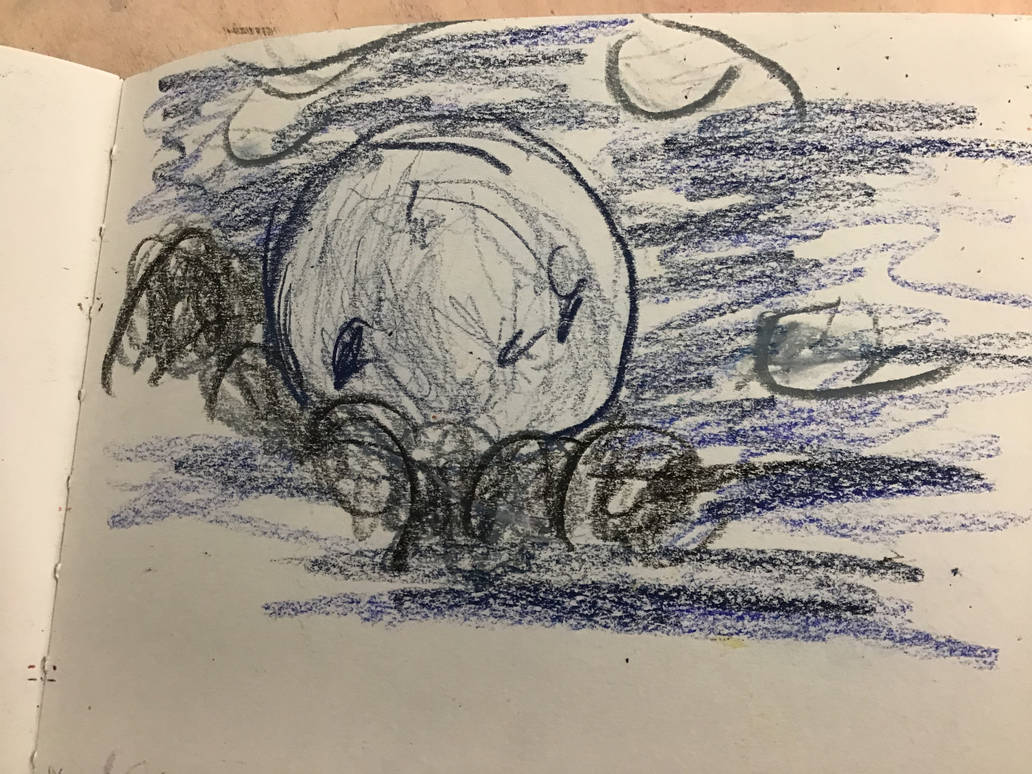
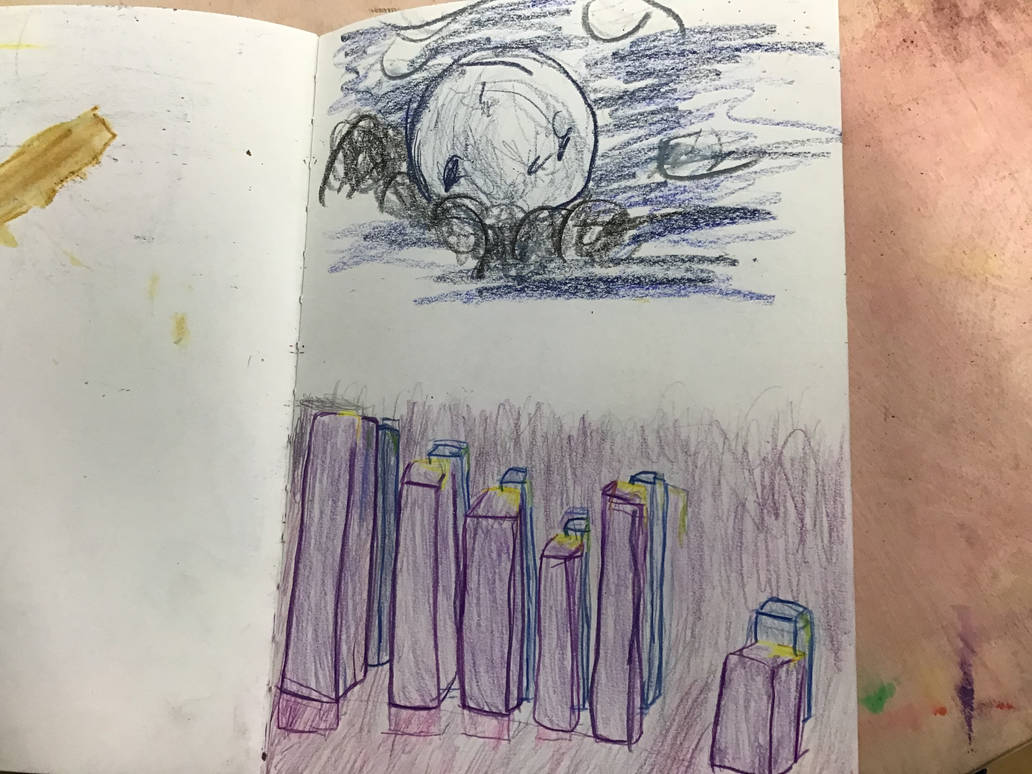
While I listened I would also draw and paint. Trying to go for a stream-of-consciousness approach. Letting images that I felt matched the music come to me. Before I had even chosen the piece of music I had my first image. A luminous, shining moon against a dark blue night.
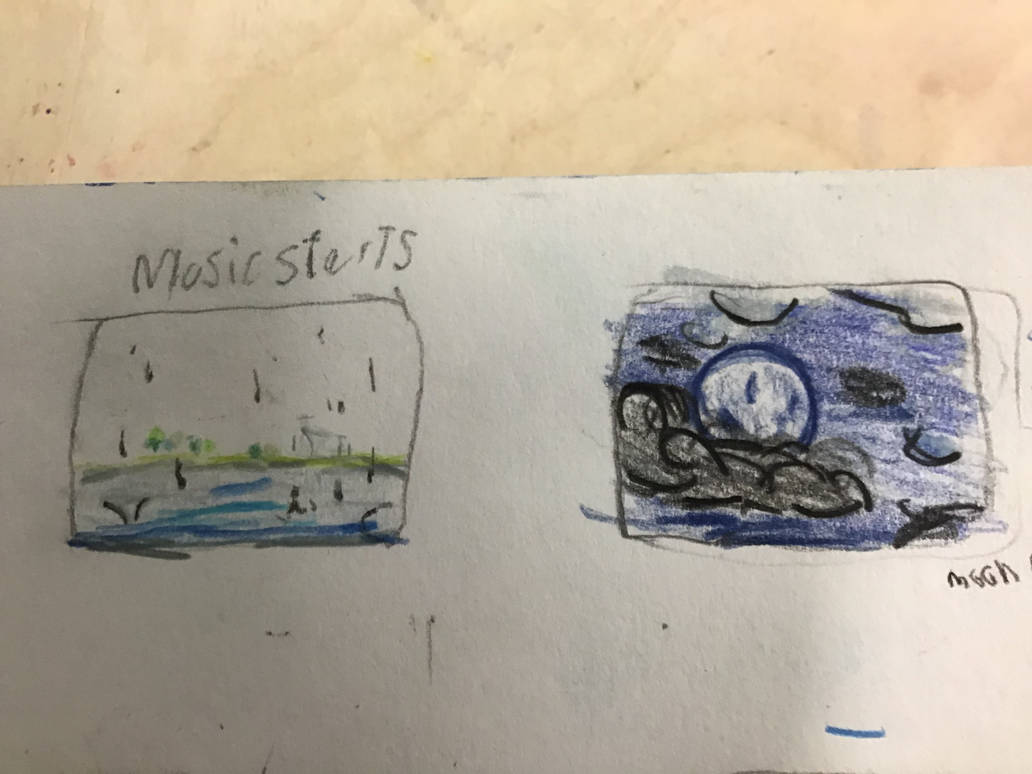
I knew as soon as I drew this it would set the tone for the whole work.
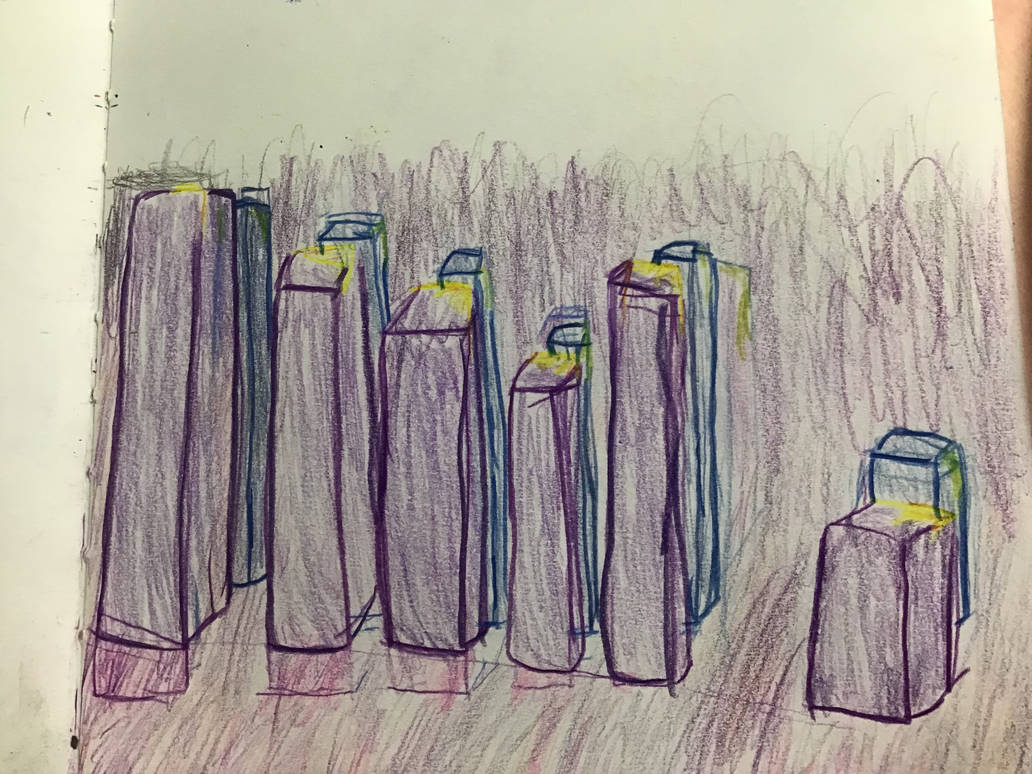
I continued, trying for something more abstract. I draw these purple towers
Inspired by old fashioned audio spectrum analysers
My hope was to have the towers go up and down in time with the music just like how it would on a spectrum analyser. But I’m guessing that’s not going to happen now. We’ll We’ll see.
My next piece of inspiration, trying to keep with the colour palette I’d set up, was rain at night. And surely raindrops look how piano key sound? This would end up setting up the recurring visual and emotional them of the peace. Water, and life. For water is life. Just as water falls from the heavens life marches on. And both water moving and life going forwards are beautiful.
My animation was not going to be abstract in the pictorial sense of the term. But it would be abstract narratively. It would be a sequence of images and themes set to the mood of the music. Like a collage of images designed to convey the theme of life and movement, All bound together by the slowly progressing music.
When I chose my piece of music I went with Pavane. A slow piece that is itself like a river. Strong, but stately. One Hawes’ most accessible but moving pieces. Once I had that done, the rest of the images fell into place.
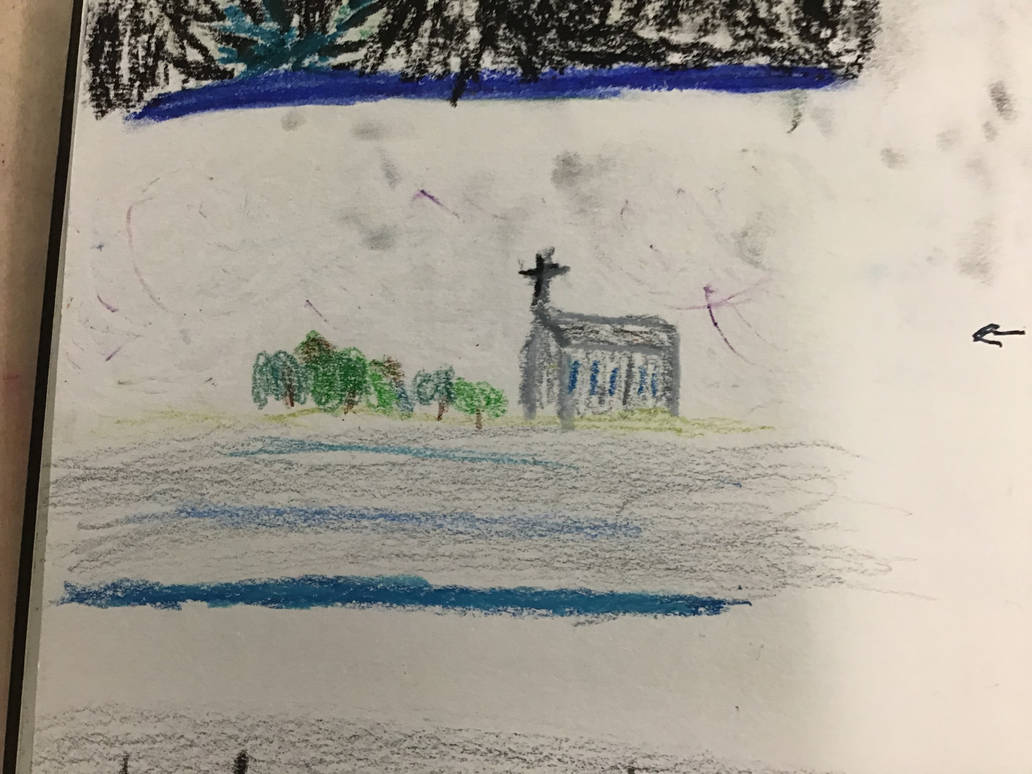
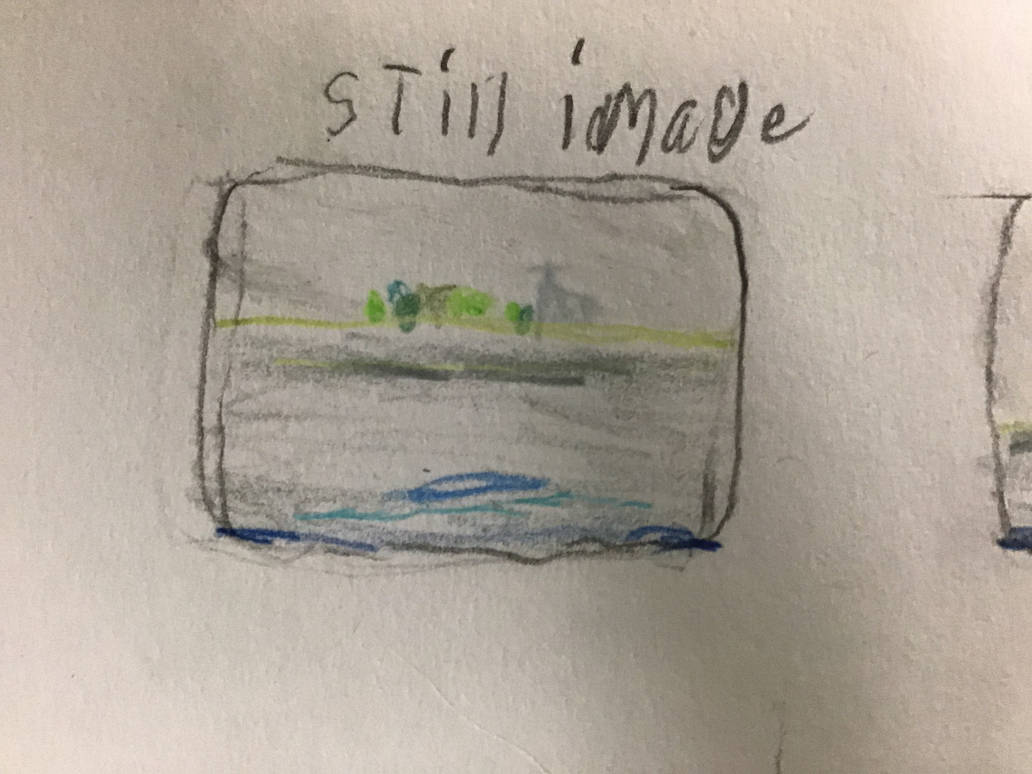
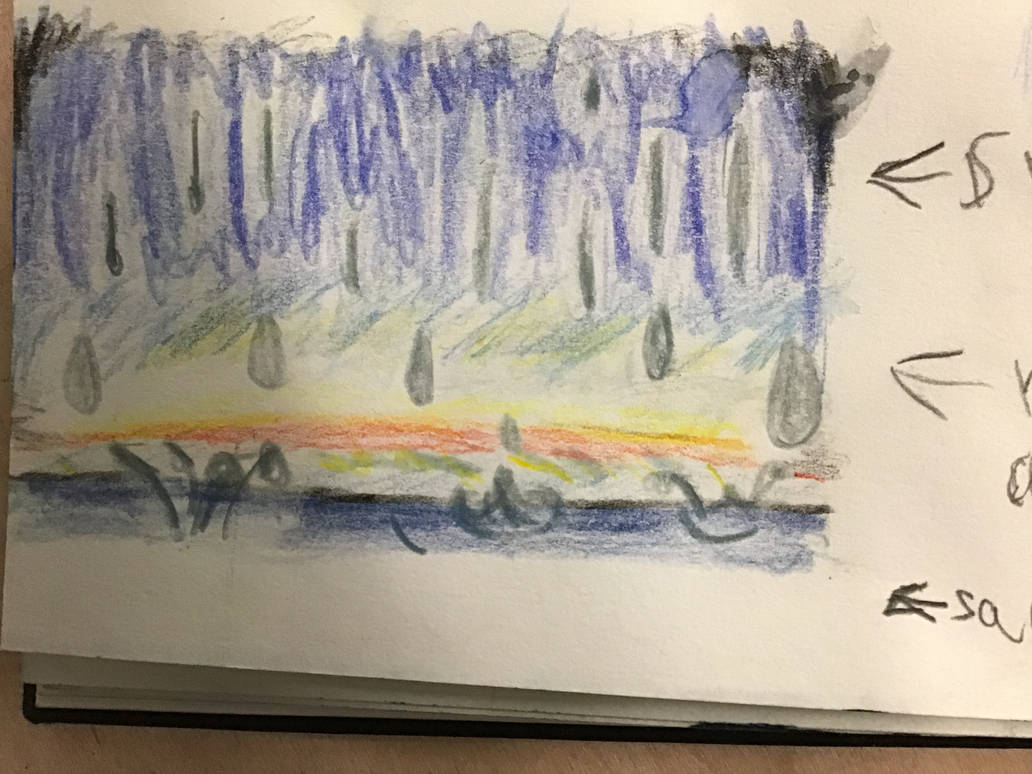
Knowing the Christian connection between myself and Hawes and that that’s why I was drawn to him I decided to go all in on it. I would open my piece with the same way I would end it, with rain. Make the thing cyclical. I’d open the piece with a view of a lake with a church in the distance, All would be silent. Then the rain would start and the music with it. Nature, religion, and life coming together to make music. I drew the whole scene first. And then went in to the fine details of how the rain would look.Just as well, I made the church and trees a bit too big in the first drawing. I was confident I could combine the two elements together later. And I feel I have in my later drawings.
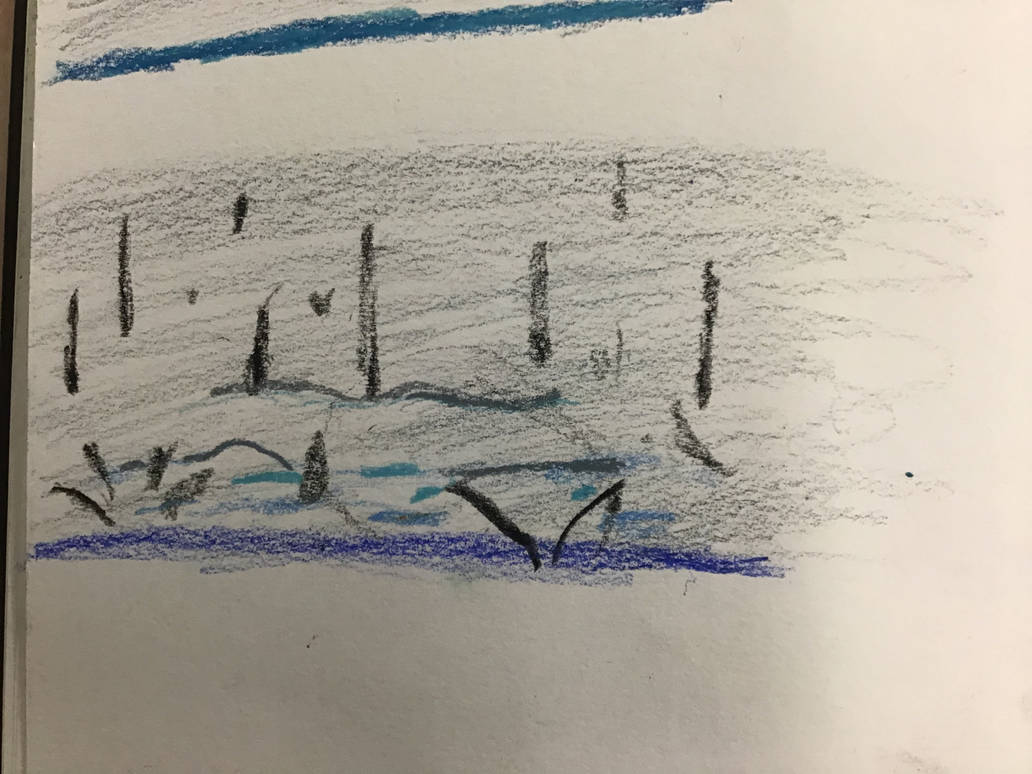
I then drew what the rain at night would look like
It’s alright.
Just to really put the Christian theme together I decided to open the piece with a prayer. Like Homer appealing to the muse. I’m not good at being spiritual but I hope it doesn’t come out too pretentious.
With my theme of water established I decided to move from raindrops landing to what happens when they land. Pond ripples. I took some inspiration from the sketch like work of Cy Twombley
And decided to draw ripples in an abstract style with unreal, lurid colours. I’m pretty happy with the result.
That said seeing the original and mine next to each other really hurts. I don’t know how I’m going to make it in the art world.
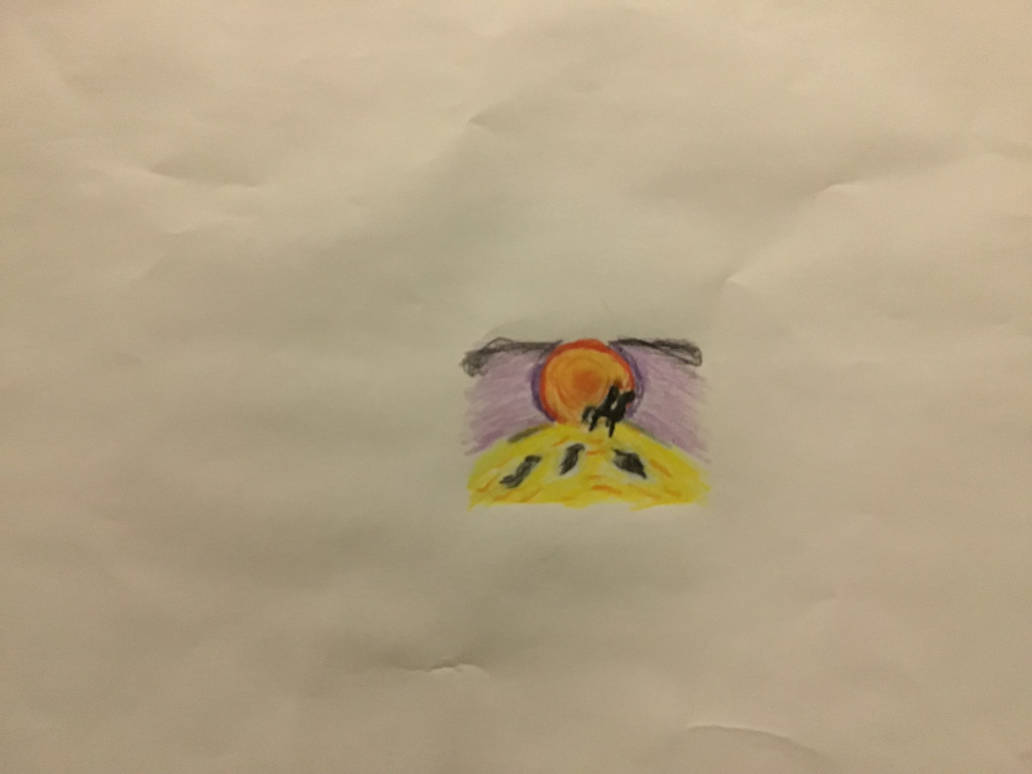
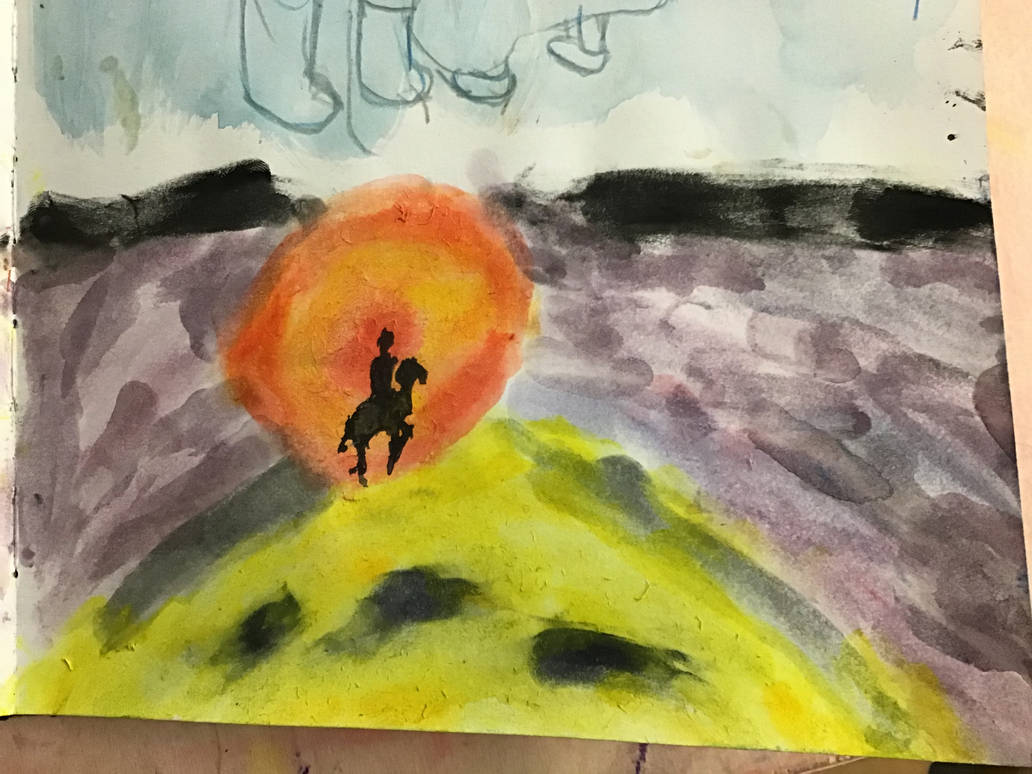
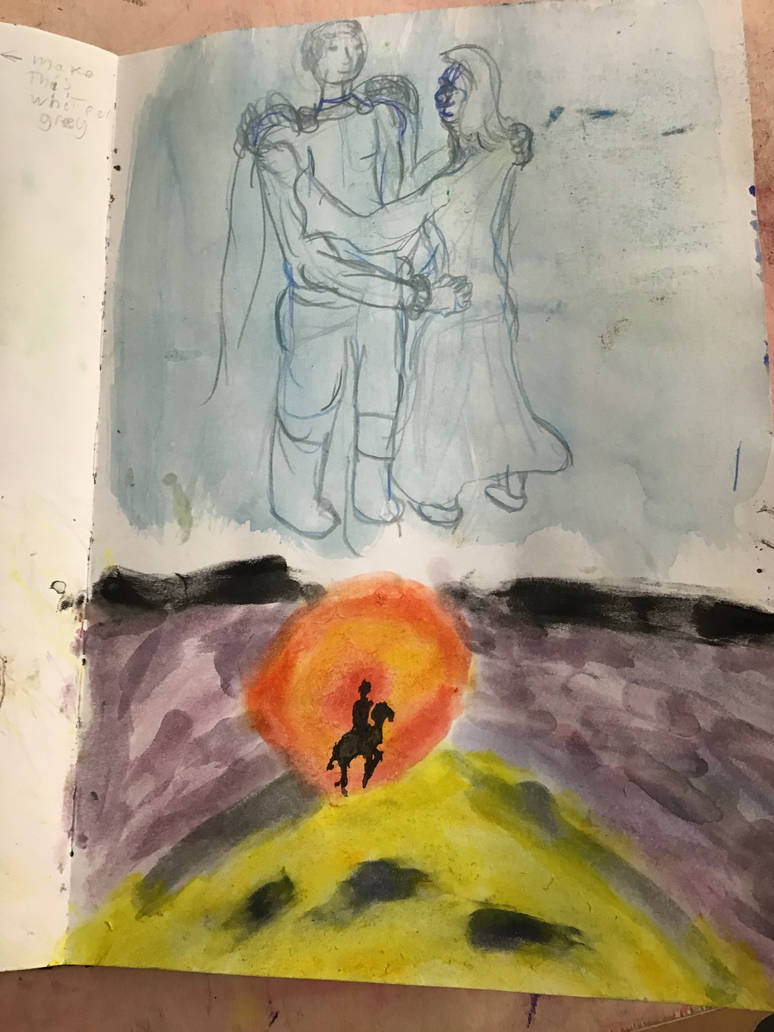
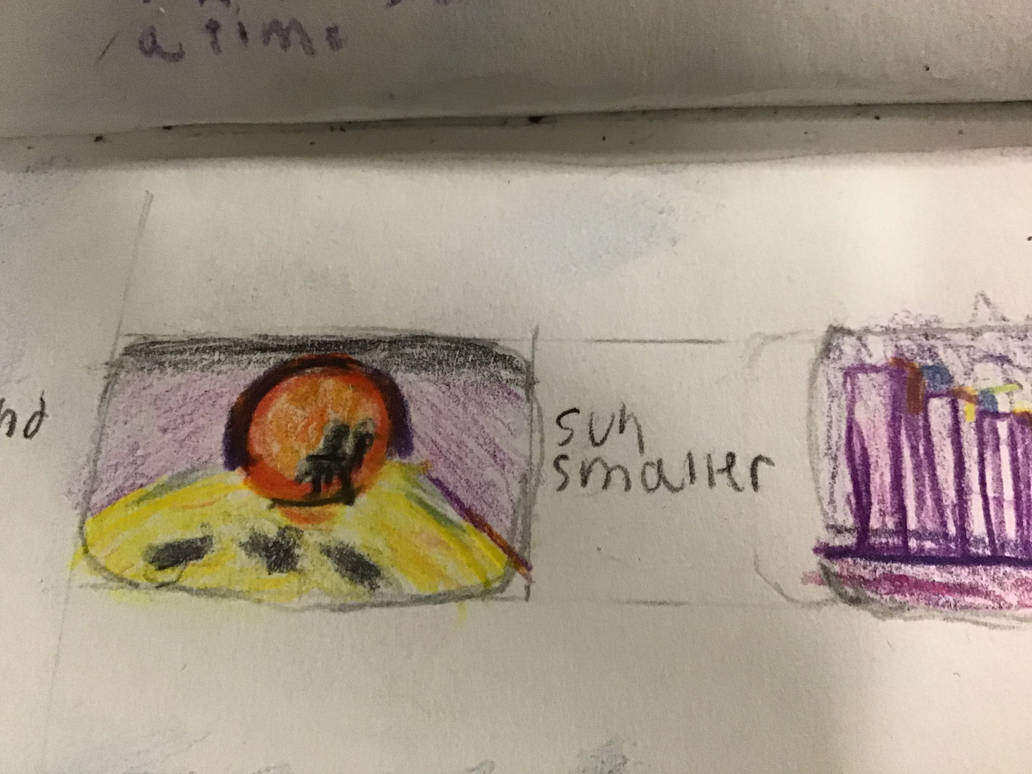
Thinking about water made me want to work with water. I pulled out my watercolours and got painting the best way I knew. With my fingers. Working heavily in wet-in-wet. I made an orange sun overlooking a sand dune while the sky turns purple as night approaches. I felt the scene needed a little more, pulled out a small brush, and added in a camel rider. Symbolism perhaps more islamic than Christian but I don’t think it matters too much.
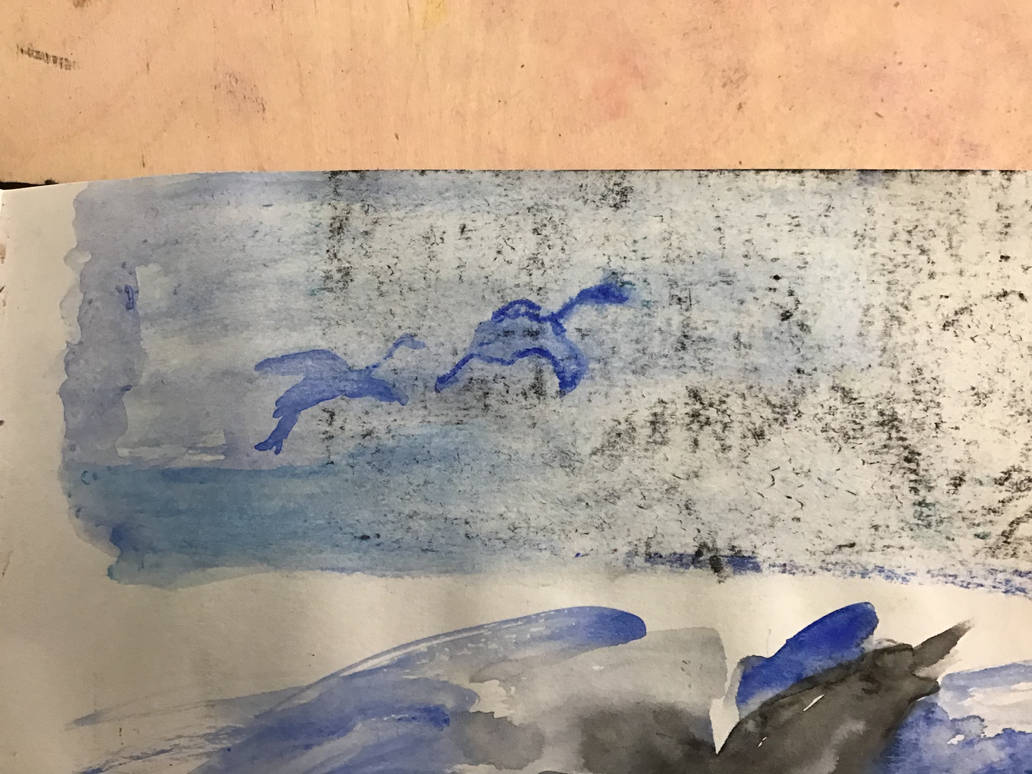
Embodied by how well the camel rider came out I decided to homage eastern watercolours and paint two cranes flying.
I felt that would look good in animation. I’d known for a while now I’d want to lean heavily into blue as the animation went on. The Moon pic having already been very blue. I decided to make my cranes all blue. Again my painting hand surprised me with the quality of the brushstroke it produced. Sadly the image had been ruined by black pastel from the opposite page rubbing against it. Hopefully you can still see some of its beauty.
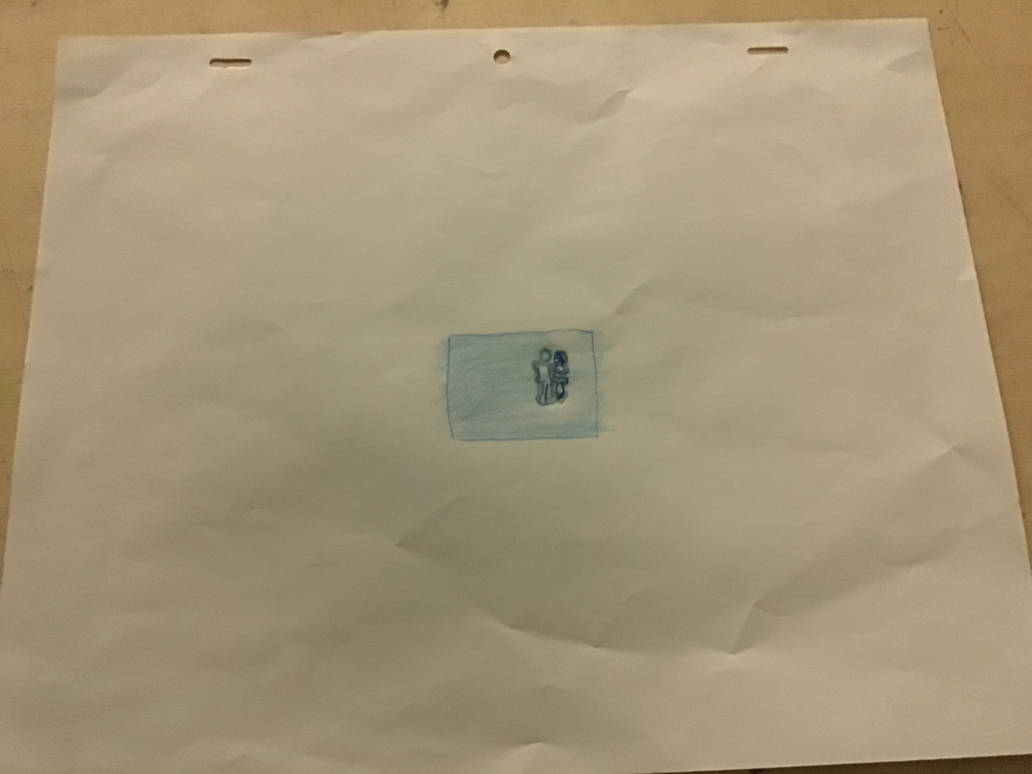
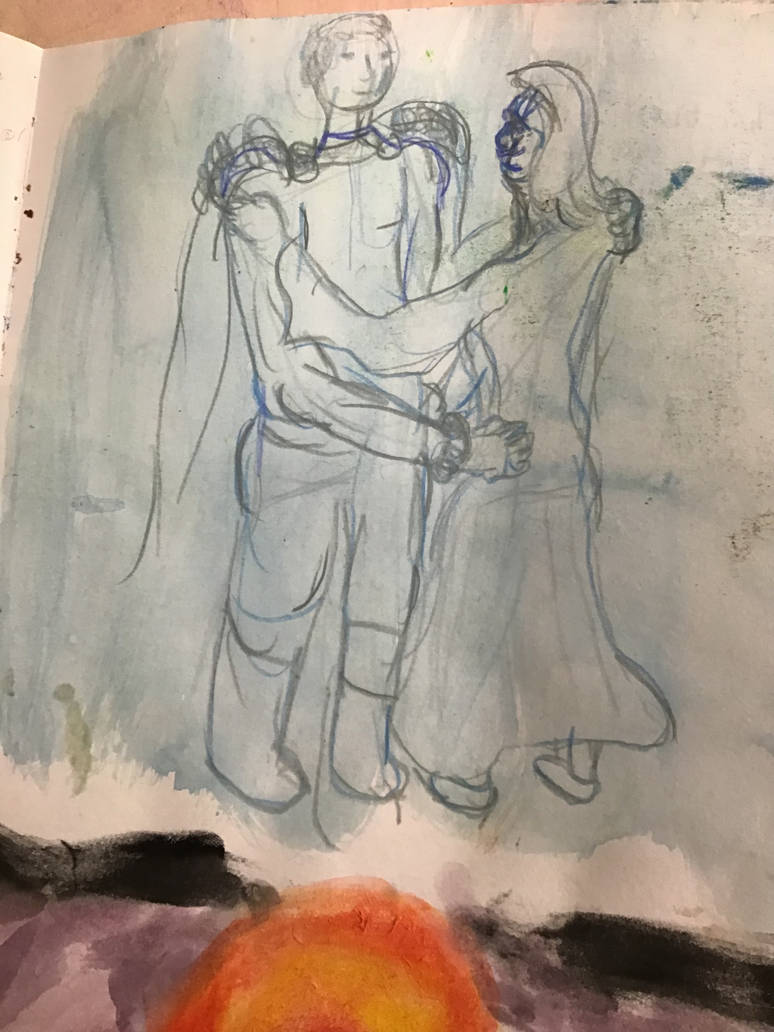
Keeping going with my blue theme I drew two dancers. One male and one female.Moving and a circular motion. Holding each-other lovingly. I painted a blue background, drew their lines with soft blue and grey, and left their interiors hollow so they’d be the same blue as the background. Giving them the impression of dancing nowhere, In a magical non-place. Fading into it. Becoming one with it, each-other, and the dance.
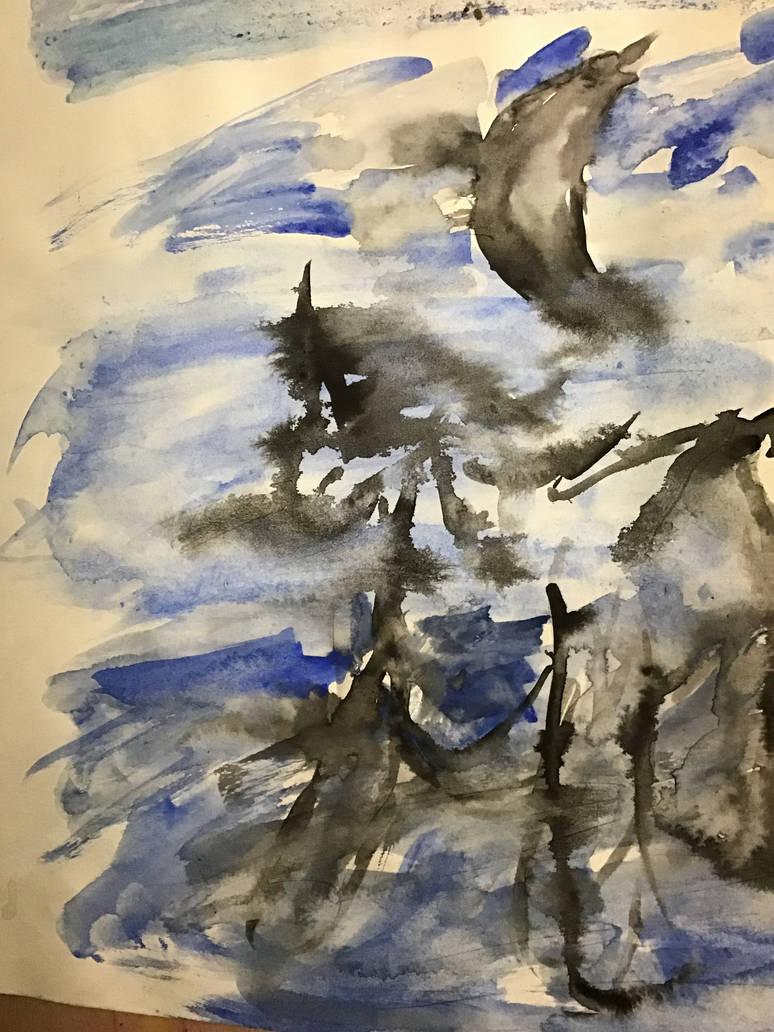
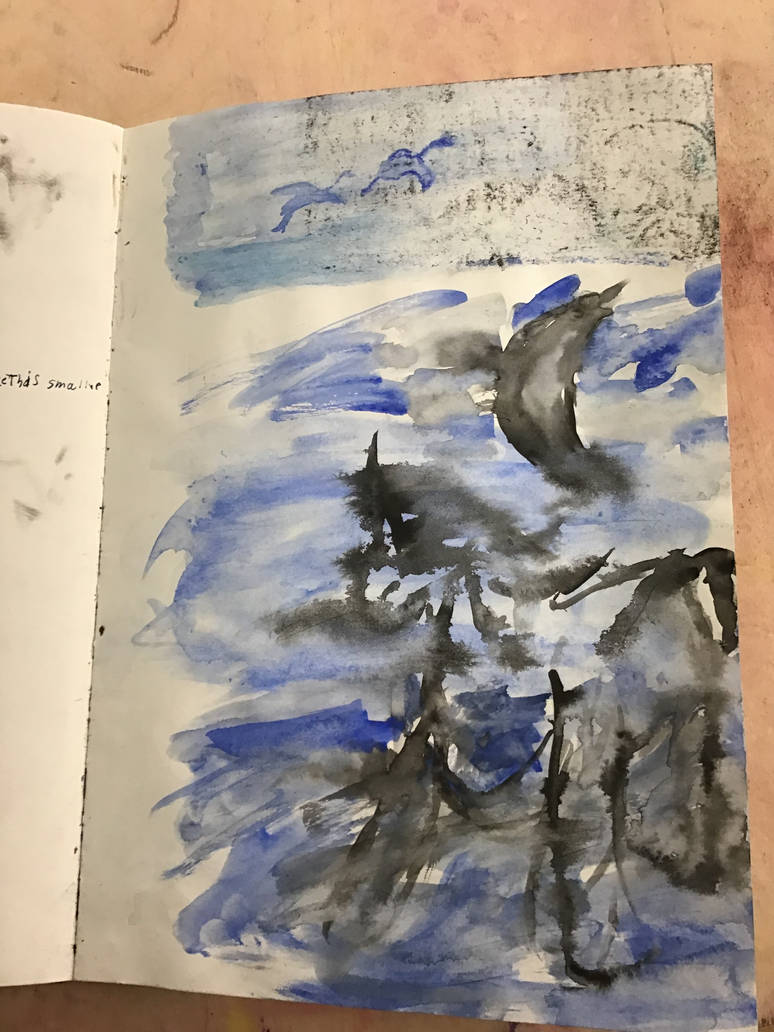
With the paper dry I decided to do another watercolour, this time going as deep into wet-in wet as you can. With the page sopping and covered in blue paint I pulled out my brush and black watercolour And painted a unicorn. I wanted it to seem vague, mysterious and serine. I’m not disappointed in the result.
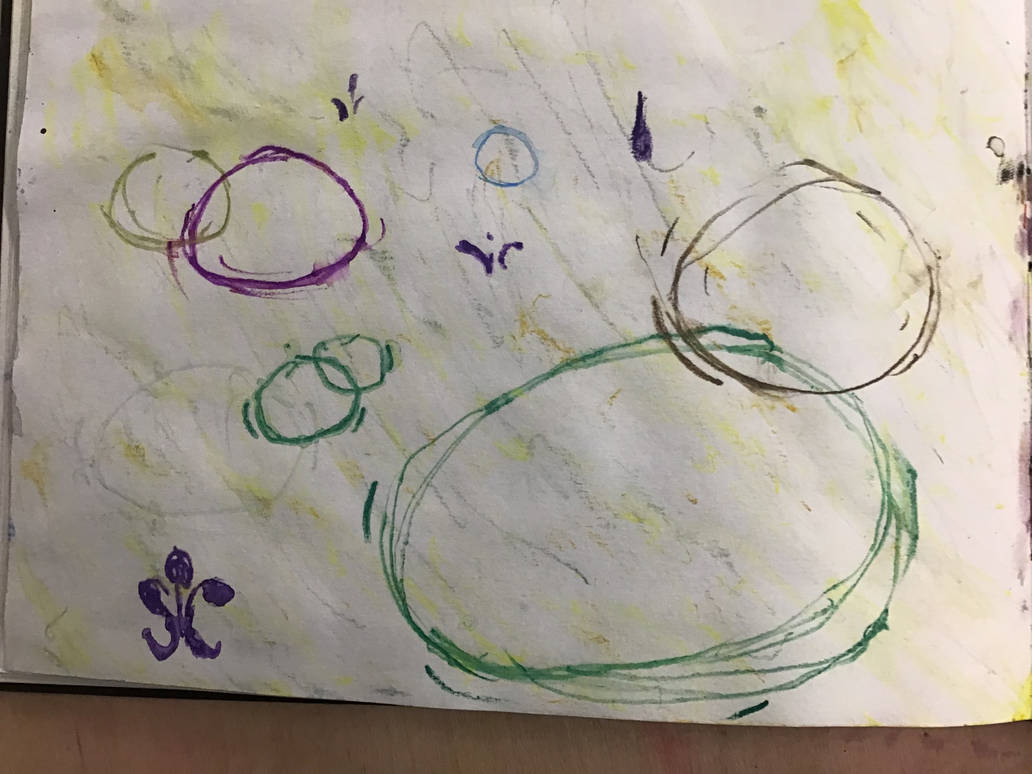
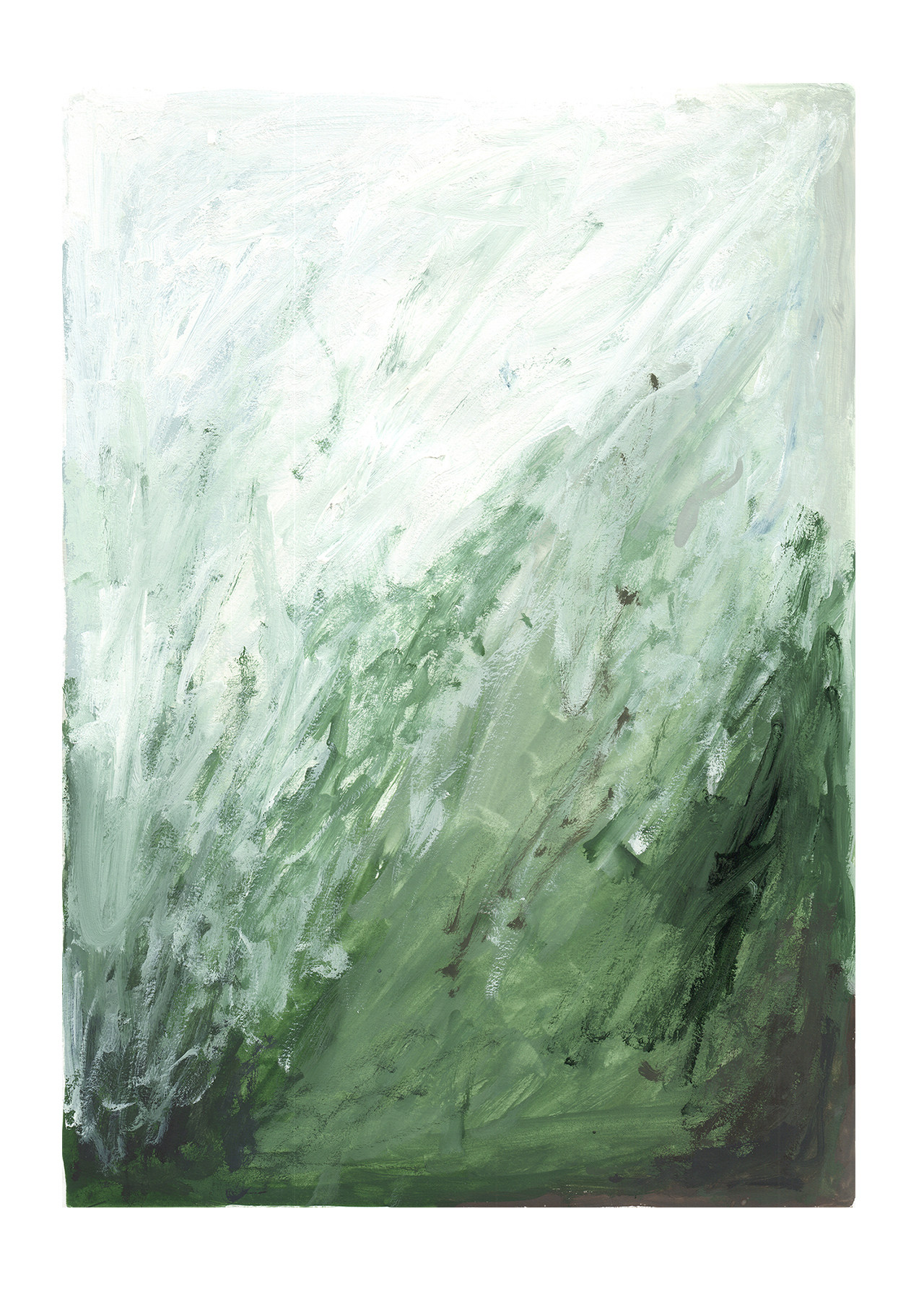
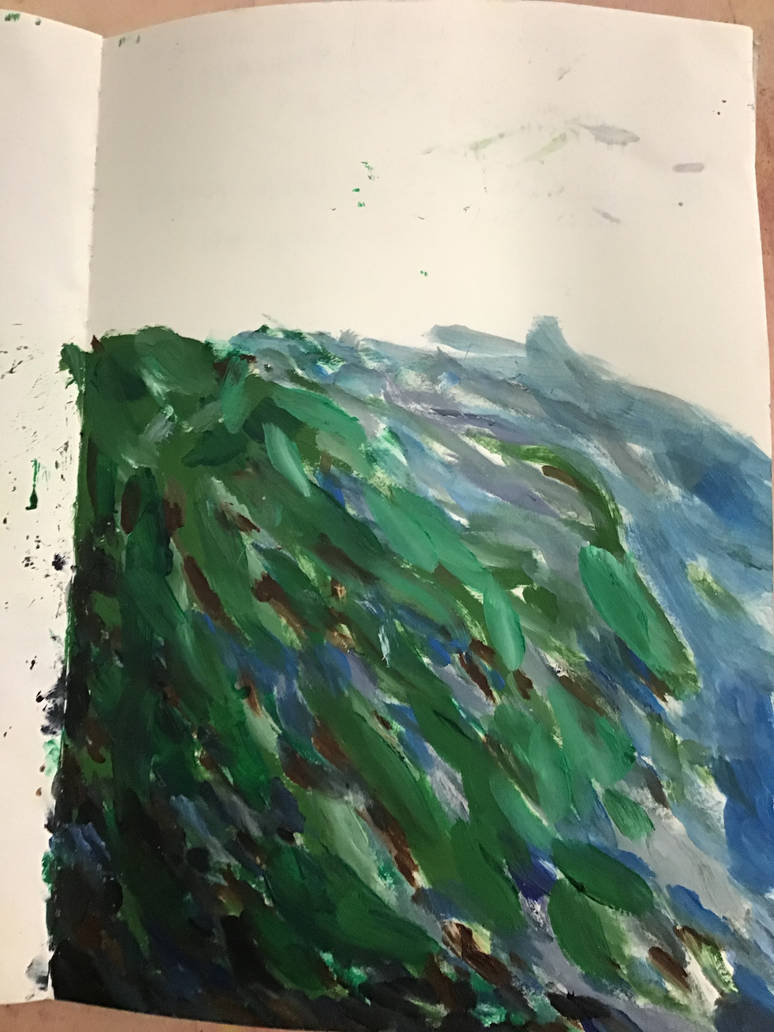
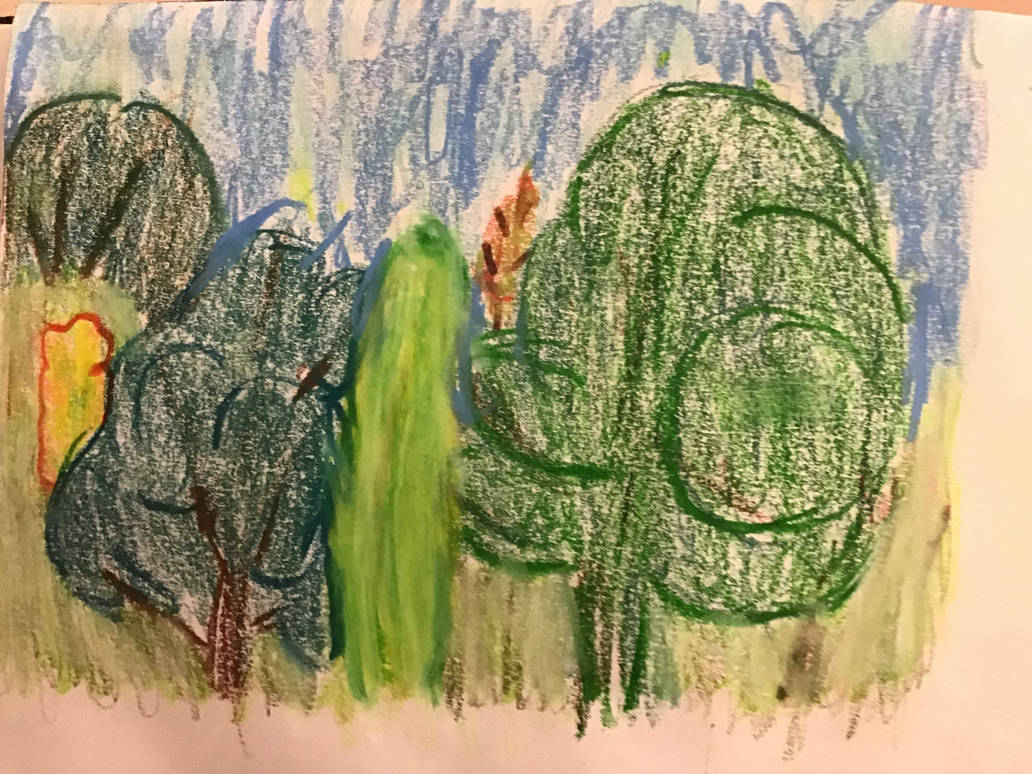
My painting high was still going so I decided to pull out my oils and decided to homage Twombly again. This time I would reference his green paintings.
These paintings have always made me think in plants that live underwater. Swaying in the current. And that is how I will animate them. Like the river plants, swaying in the underwater breeze. Painting this was fun. Even if it is a shameless imitation.
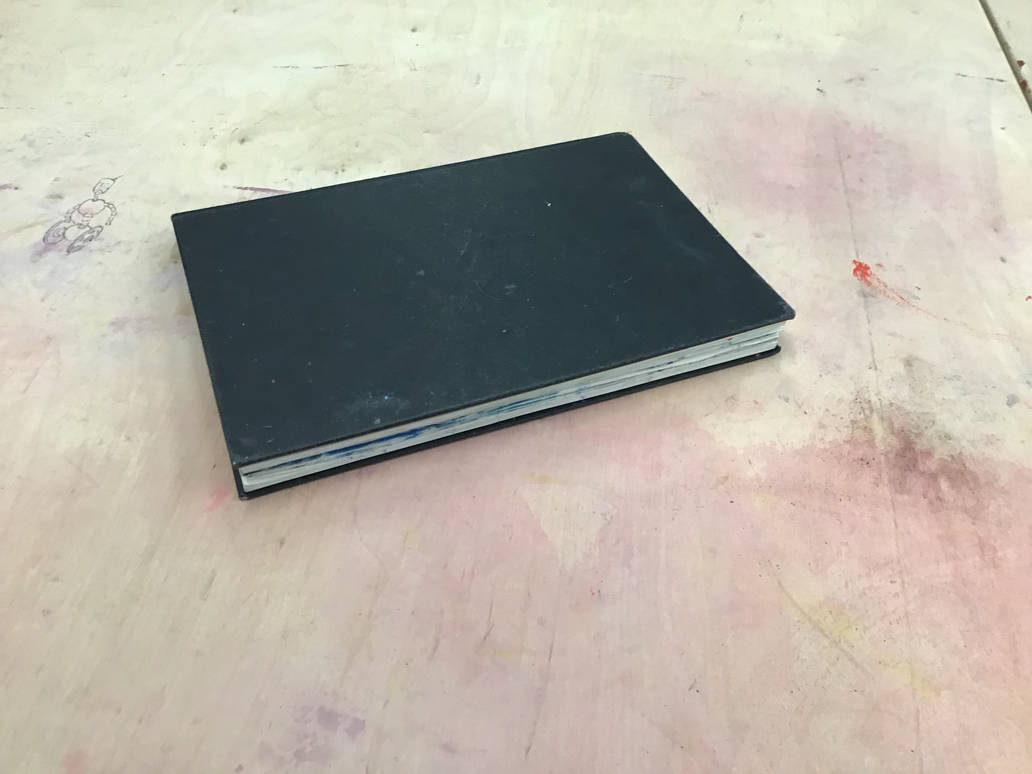
All this paint and water has warped my sketch book a little. But I don’t mind. It’s good that it looks well used.
And here’s what the pages inside look like
And that’s what I made over the summer.
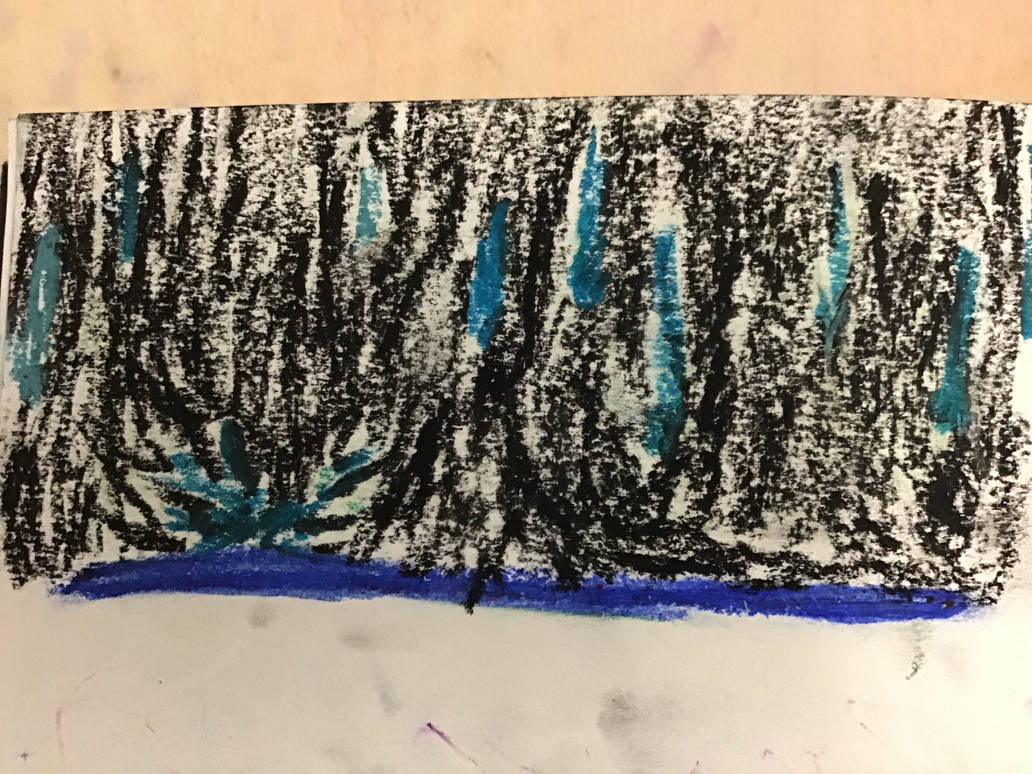
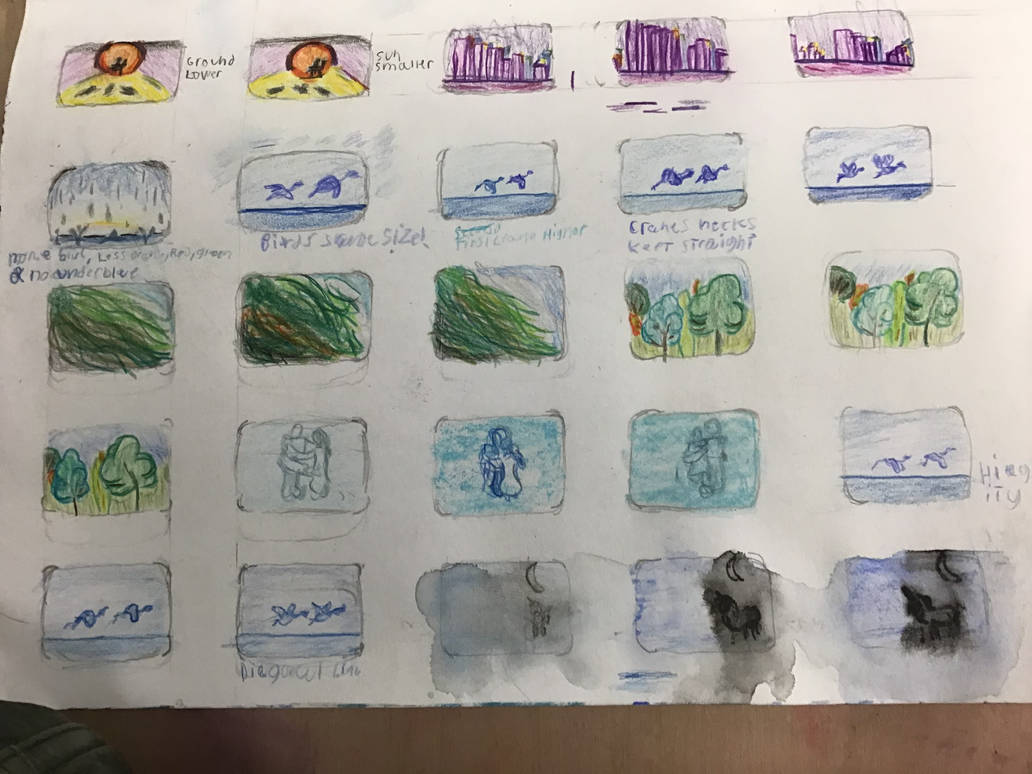
When I came back I had a surprising amount of energy. I got to work on making thumbnails. I even made a piece of concept art. Inspired by the view outside my window, trees blowing in the wind
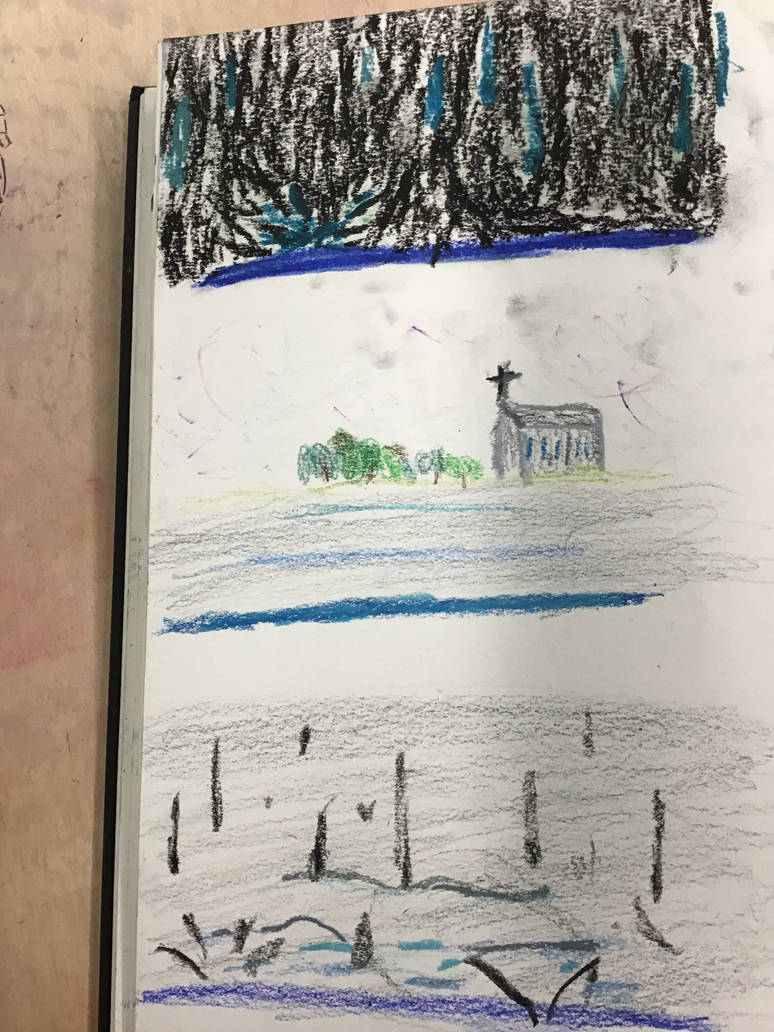
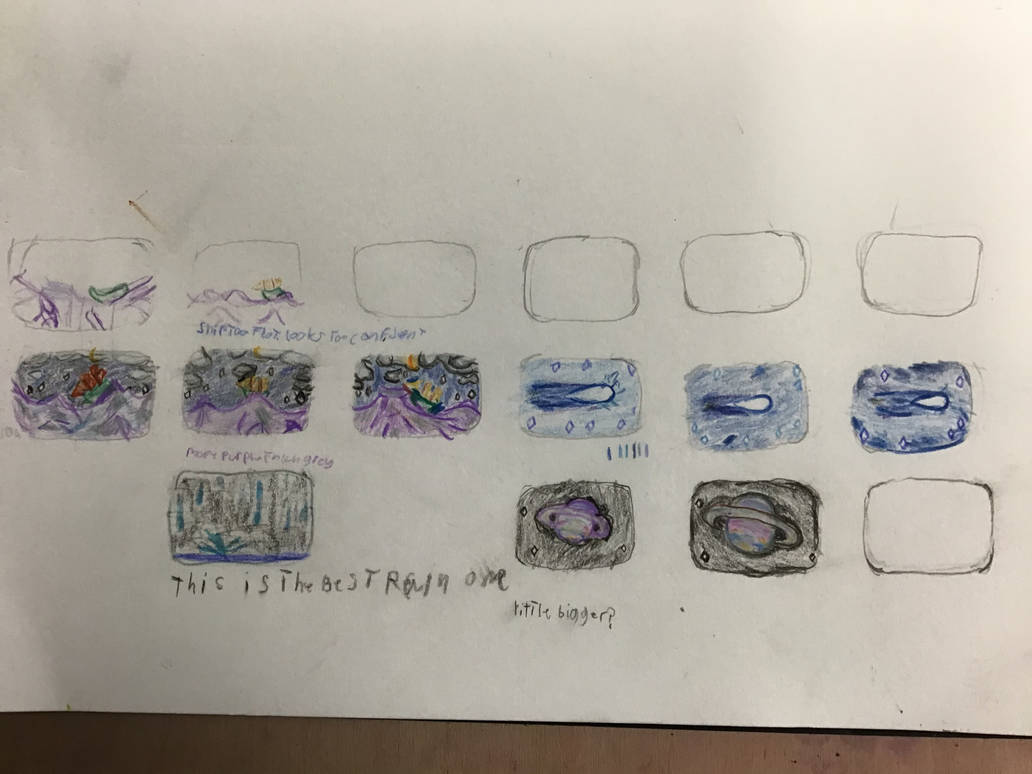
I used my thumbnails to refine by designs, like with the church
And again I took notes on how these could be improved
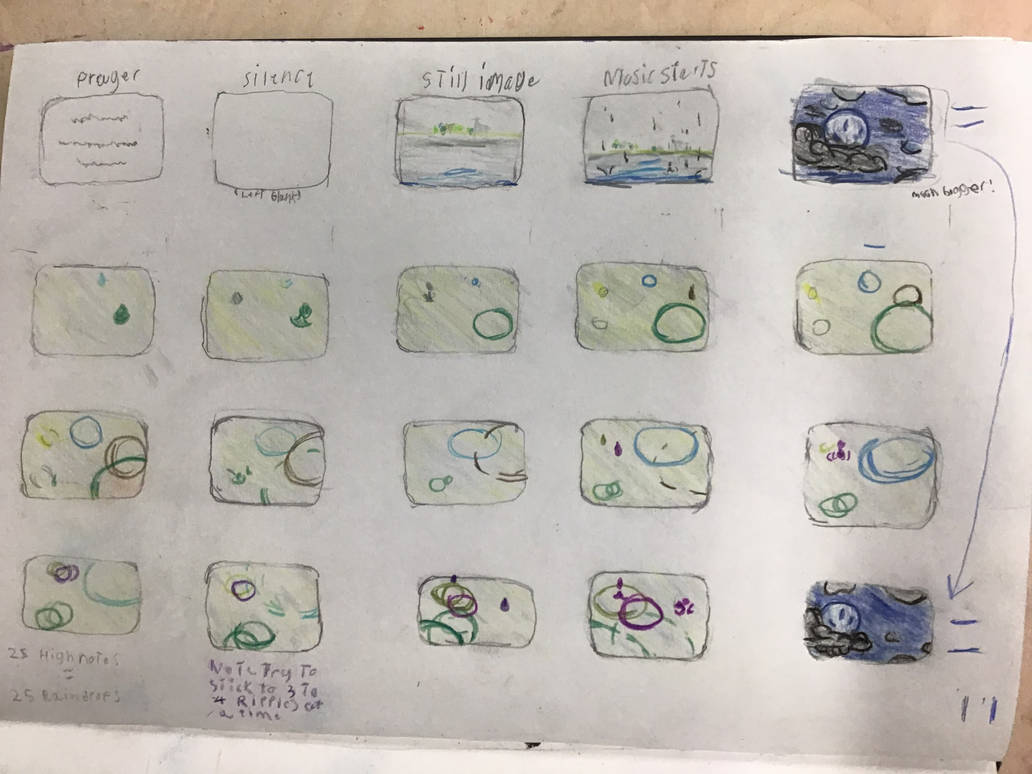
Here’s what they all looked like when completed
When I was done it seemed like I didn’t have enough pieces. I decided to end the piece bridge the opening and the ending with a shot of rain with at twilight
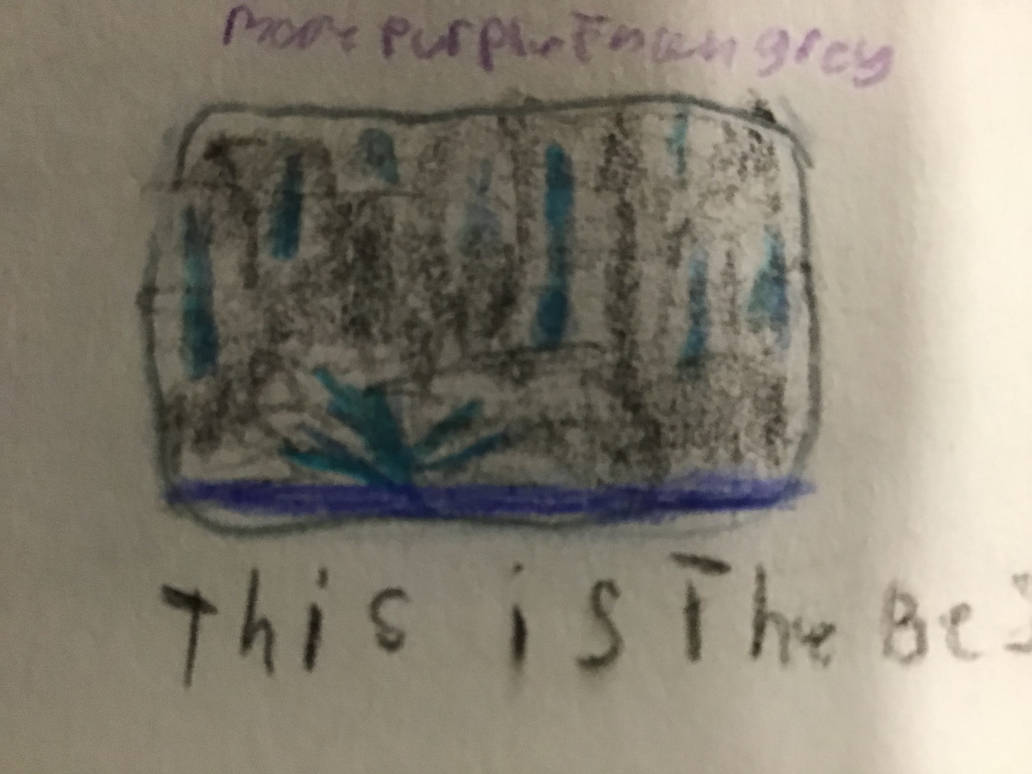
I even made an extra thumbnail for the night rain as I ran out of space on the first two pages. Again, they’re good for refining designs. And this one came out better than the others.
When I eventually got my act together Morgan helped me scan the images in and turn them into an animatic. And I cannot stress how much he has helped me this term. I would be sunk without him. He’s been a godsend. I think I might actually (fingers crossed) be getting the hang of using Premier now.
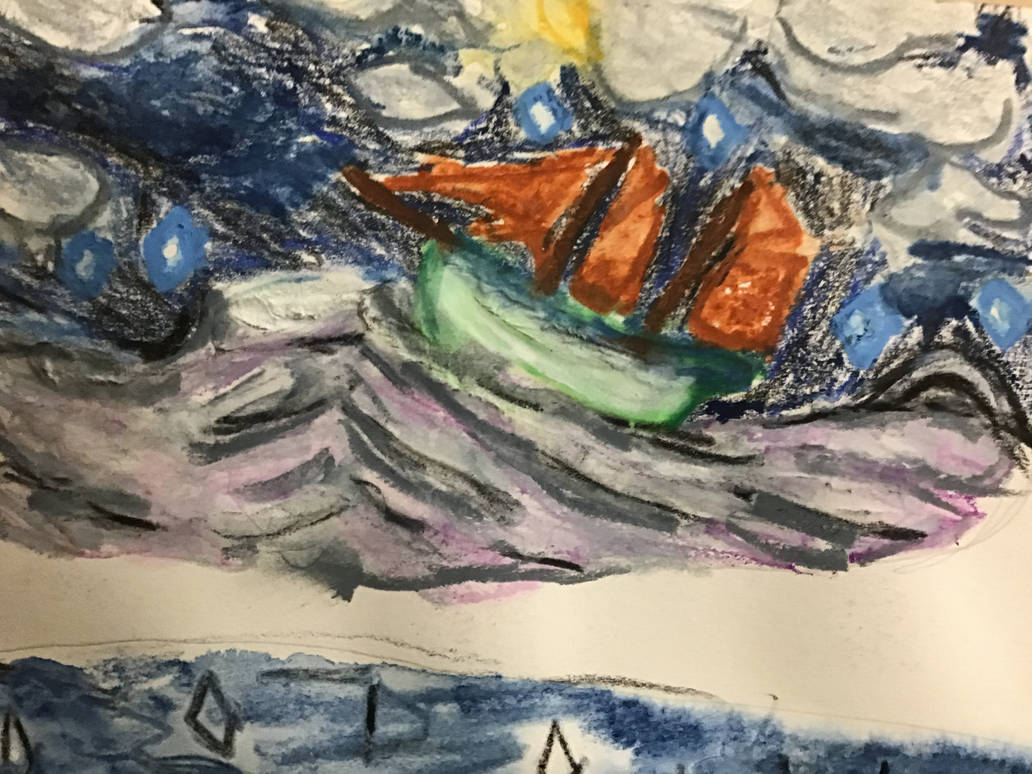
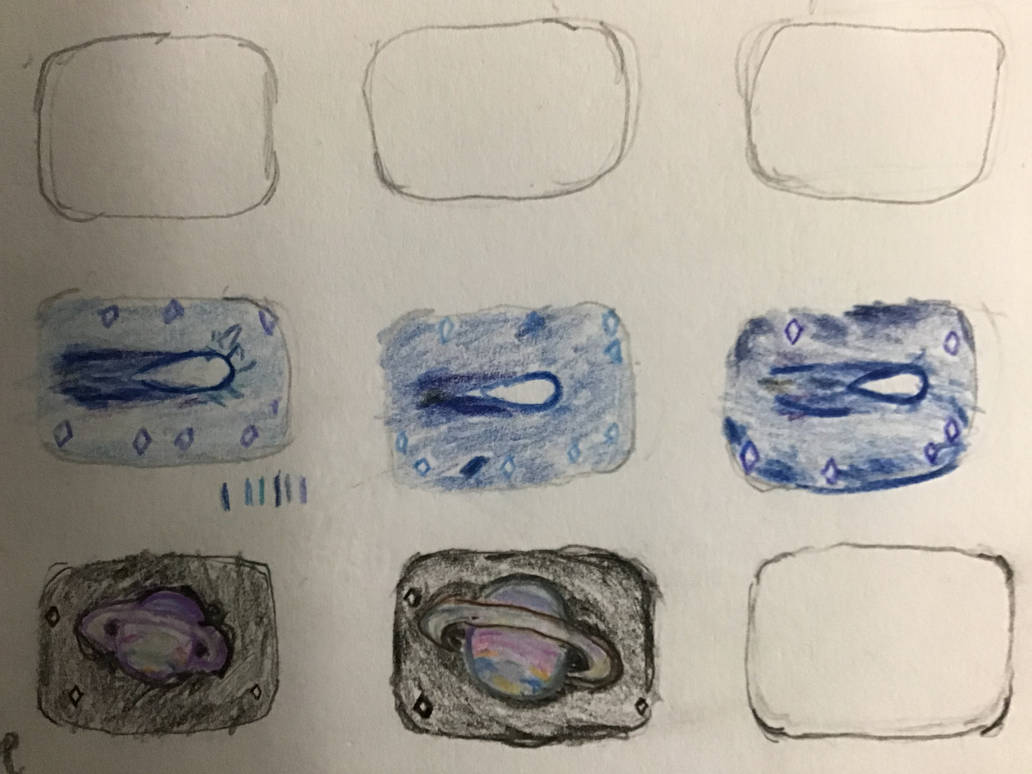
We put all the images in as an animatic. And I discovered that if I wanted this to feel right, not have any piece of music outstayed its welcome and be on a piece, I’d need three more pieces. I got to work on this. I picked out three ideas I’d considered but never followed up on. A ship at sea, a comet, and a planet.
For the ship I knew I wanted to base it on my memory of an Alfred Wallis painting
I think my attempt came out ok
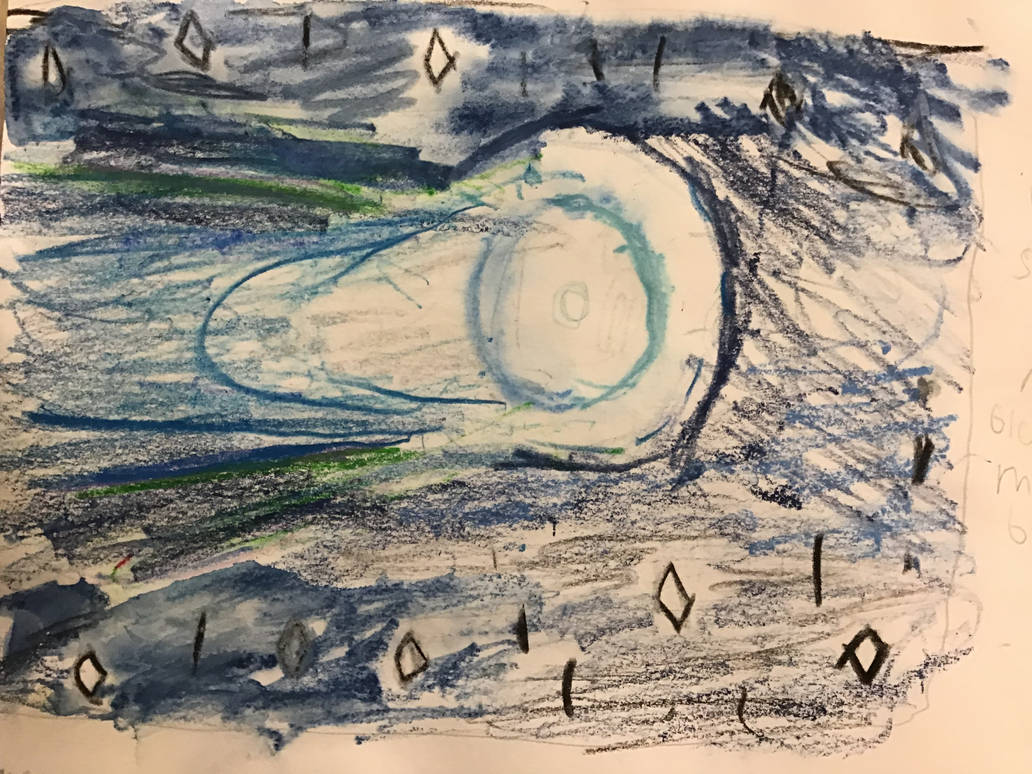
I spent a long time looking at images of blue comets are tried to combine them into a single image
It’s a mess. But I think I’ve been able to make it better in subsequent versions.
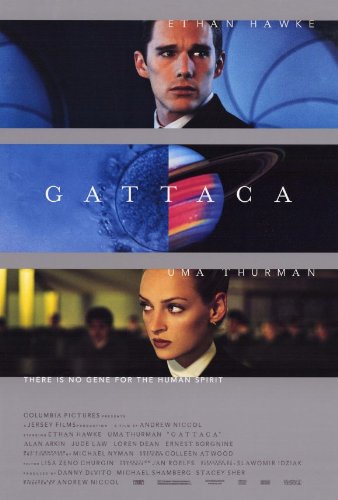
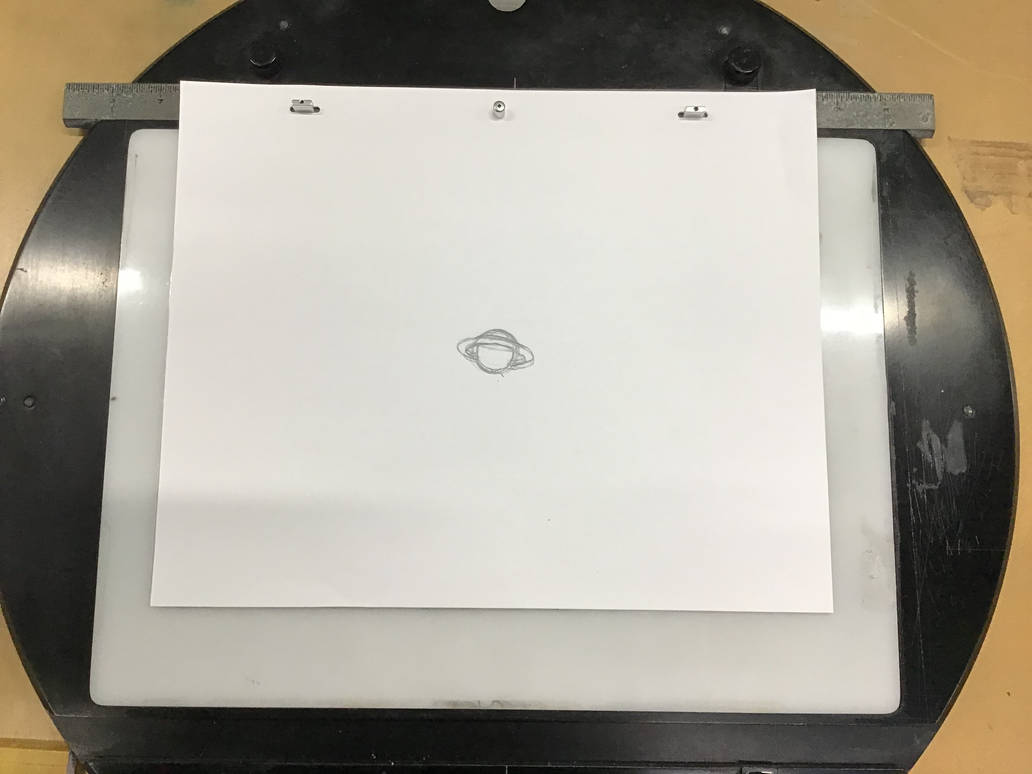
For the plant I had to go with Saturn I find the planet fascinating. This isn’t the first time I’ve used Saturn in my work. I used it in a mandala I made for my art diploma. Both then and now I wanted to base it on how Saturn looks in the poster for the movie Gattaca.
Saturn is utterly fascinating when viewed through infrared or ultraviolet light.
For this occasion I opted to base it on this image of the ringed planet
Beautiful…
Here’s what I made
Not too bad.
I want to put Saturn near the end of this animation. Almost like meeting God the end of journey.
I made some thumbnails for these two so I could put them into the timeline.
I was now ready to start animating.
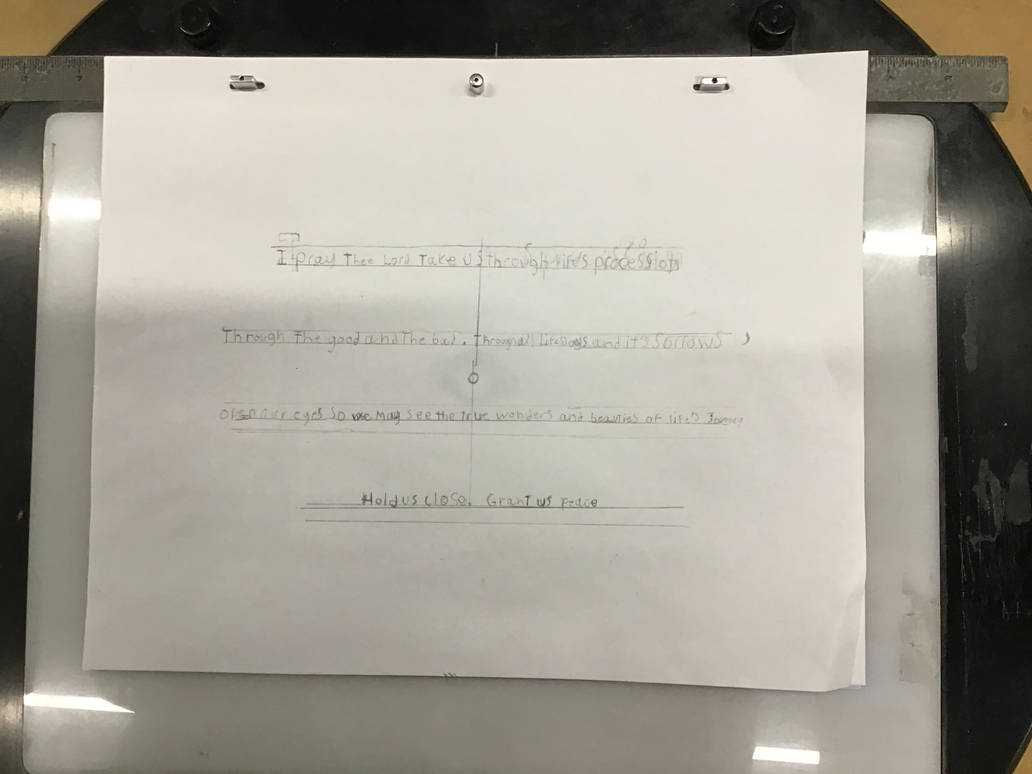
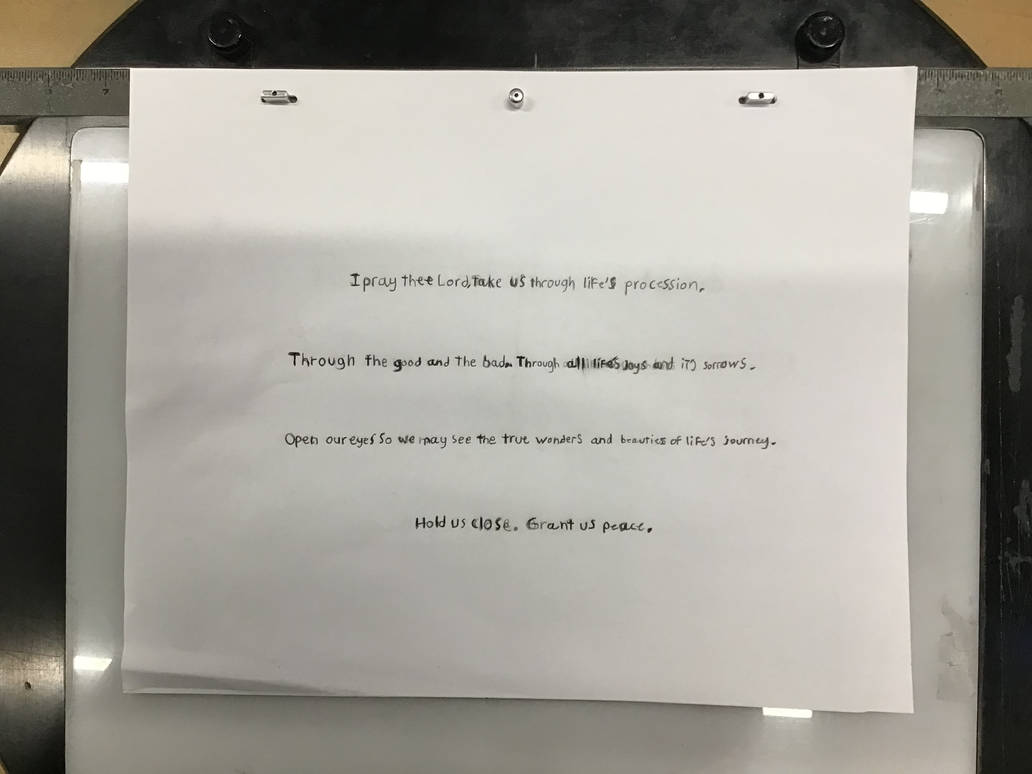
I decided to start with the prayer. I wrote out the best and most honest prayer I could think of. I won’t even judge how I did. Here’s what I wrote
I pray thee lord. Take us through life’s procession.
Through the good and the bad. Through all life’s joys and it’s sorrows.
Open our eyes so we may see the true wonders and beauties of life’s journey.
Hold us us close. Grant us peace.
I decided I would write this out on paper. Keep the handcrafted look consistent. Trying to keep the text centred was hard. So I did a practice run first.
I worked from the centre of the line and moved outwards. I think it has come out surprisingly good.
Now at last I am animating. And now I feel alive. I’m still in a rough spot. I’m not working as hard as I should be. I’m writing this after all. But I am working at least.
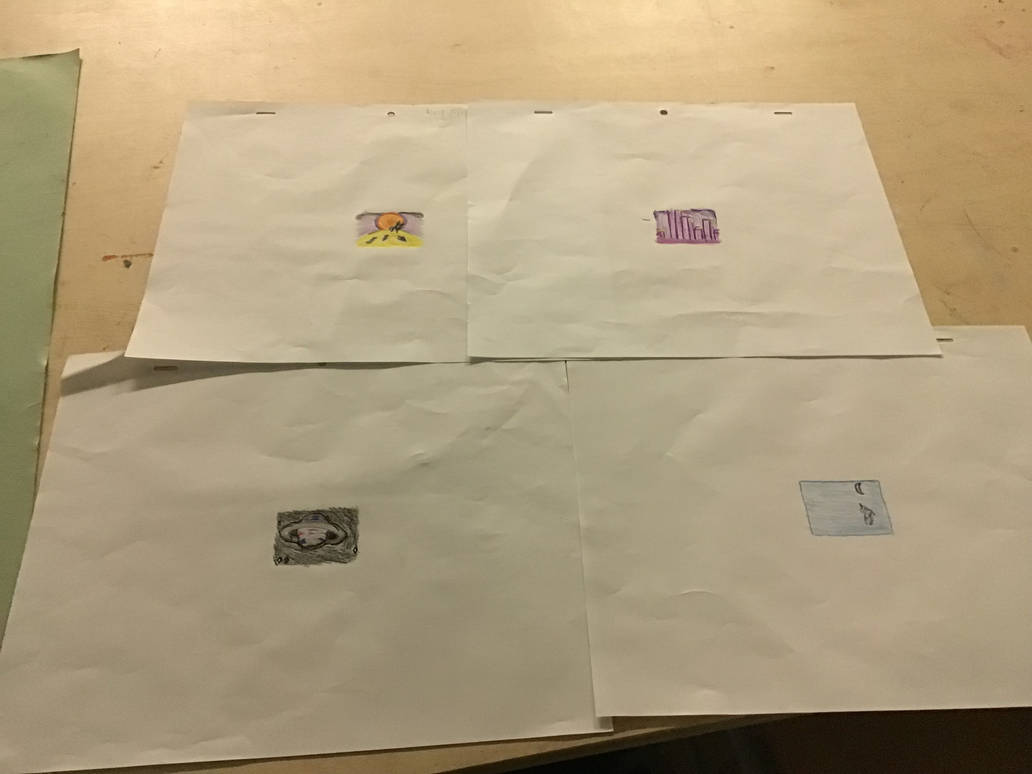
At Owen’s suggestion, I decided to try animation at a similar scale to the thumbnails I drew. Owen likes how they look (I sort of like them two) and working at this scale saves me a lot of time. I can get these done within minutes.
Morgan showed me a scaling grid. Something animators use to draw within so they don’t have to draw all the way up to the edge of the paper. This is going to be a huge benefit for me. Drawing up to the edge took up a lot of my time. But I had to so I could keep the placement consistent. This will be a lifesaver. Normally apparently animators work within a size slightly below A4. But this grid can let you draw rectangles at many sizes. Here I’m drawing at about 5 by 3 centimeters
I’m not sure what this will look like. It will look quite unique I’m sure of that.
I feel like I should be talking about what I’ve learned more. What mistakes I’ve made and what I can do to improve. People seem to like it when I’m self-reflecting. Maybe later. I’m too tired to think right now.
Well It’s clear I shouldn’t wait on these journals. I didn’t do this until now because it didn’t feel like I had enough to say. Clearly a mistake. when it comes to courses like this, don’t let the work pile on. Even if the journals will be small and boring doing them in the moment will save you time in the long run.
I’ll soon have another journal about how the animation is coming (I have no choice) and hopefully I’ll have something good to report. But I doubt it. It’s too late in the game And I’m far from my peak. But I’m hoping I’ll have at least a few seconds of animation to show. And maybe that will be enough to get me by. And On top of all that I have to also write 3500 words for Constellation too! Why do did they ask us to finish subject and Constellation on the same fucking day!?
And my black pencil is getting really short now.
Hopefully that at least is a good sign of where I am
It has been a poor season for me. I am only just beginning to make animation now. I fear I am going to fail this term. Well Lets see what I can learn from this.
The year started badly. Last year I cut myself off from most personal projects so they wouldn’t occupy my time. It meant I could put all my focus into my work. And it paid off. I think I did pretty well in my first term last year. But I found once summer came I felt left out and returned to my old hobbies with a vengeance. I got too involved. By the time I was back in college I had a handful of private projects all going at once and was unwilling to abandon any of them. It ate up all my time. I had trouble sleeping. All my creative energy was drained. But worst of all, I just couldn’t concentrate when in uni. I could only think of what I was working on in my spare time. Sometimes I would even work on those projects in class because it was all I could think of.
It’s clear my strategy from last year was necessary for me to proceed. I’ve been weaning myself off them, and unsurprisingly I’m now working again.
I don’t want to pretend that this isn’t my fault. But I feel the fact we were told that we had plenty of time and could get the animation part done towards the end. I bought into this. But I should have trusted my instincts and gotten hard to work immediately.
Another thing that just isn’t helping is the fact this term has been a lot more computer heavy. I need to turn the PC on to listen to the music I’m animating to. And worse the registration is now totally online. So I have to turn the thing on every day to sign in. The irony being as soon as the internet is on I forget why it’s turned on and most days I forget to sign in at all. I’ve asked Owen, Tom, and Spencer if an alternative could be found. So far nothing has happened.
I needed to cut myself off from the internet when in uni last year to get anything done. And the problem is just as bad now. Maybe I need to find away around my addiction on my own long term. But for now it really would help me if I could get my old grove back.
Constellation is just as useless this year as it was last year. In fact given that both it and Subject are at maximum intensity this term is actually harder than any of the others. I’d hoped this would be an “Easing you back in” term. I was wrong.
As I started to get my head back together I found I was now doing my constellation work in class. It was still wasting time. I normally do Constellation work at home. But it was at least something. I feel bad about it because as far as I can tell Constellation doesn’t matter this year. It’s just a time waster. I can write about whatever I want whether it’s related to what we’ve studied or not, and I don’t know if the mark I get for it even matters So why am I doing it?
I’m also really seeing why the sleep routine I imposed on myself last year was so important. Obviously I can’t work if I’m sleeping in class. But even when, like now. I figure out a way to achieve a three hour sleep pattern, it has other effects. I feel very cold in class. Or maybe I find I need to rest for periods at a time, even if I’m awake. Clearly getting a strong, six hour routine last year was another thing I did right last year I need to relearn.
It’s shocking how much I’ve forgotten. I feel like I’m back to zero when I start animating. All that knowledge I thought I had seems to have dried up. Even small things seem to hurt my brain. It’s like when I forgot how to work well I also forgot what I learned when I was working well. Simple things are costing me a great deal of effort.
Ironically I just don’t feel alive until I’m animating. That’s another thing that might have slowed me down. It seems pretty clear to me that while I can do all the other bits, concept art, storyboarding, sound work, and editing well enough, I don’t feel any passion rise in me until I’m at the animator’s easel and ready to work. It’s scary. But I feel my head filling full of ideas. I know where my strength lies. How I’m going to work with this handicap I don’t know.
There’s a dead zone in my head. A place where thoughts are, but I can’t see what I’m thinking. It’s really uncomfortable because sometimes I don’t know what those thoughts are.
When I’m trying to get ideas for my work, but they’re in the dead zone, my life becomes hellish, and I’ve no idea what to do to combat this. In fact I feel like the real reason I wanted to right about this dead zone is currently in the dead zone.
I normally just wait for thoughts to come out of this dead zone, and sometimes they do. But now I don’y have time.
There where other things I felt I’d learned about how I learn. But ironically I’ve forgotten what they where. and now I’m running low on time.
Expect A journal on what I’ve done, how I did it, and what (If anything) I’ve learned from it soon. Hopefully I can salvage something out of this mess.










 Beautiful…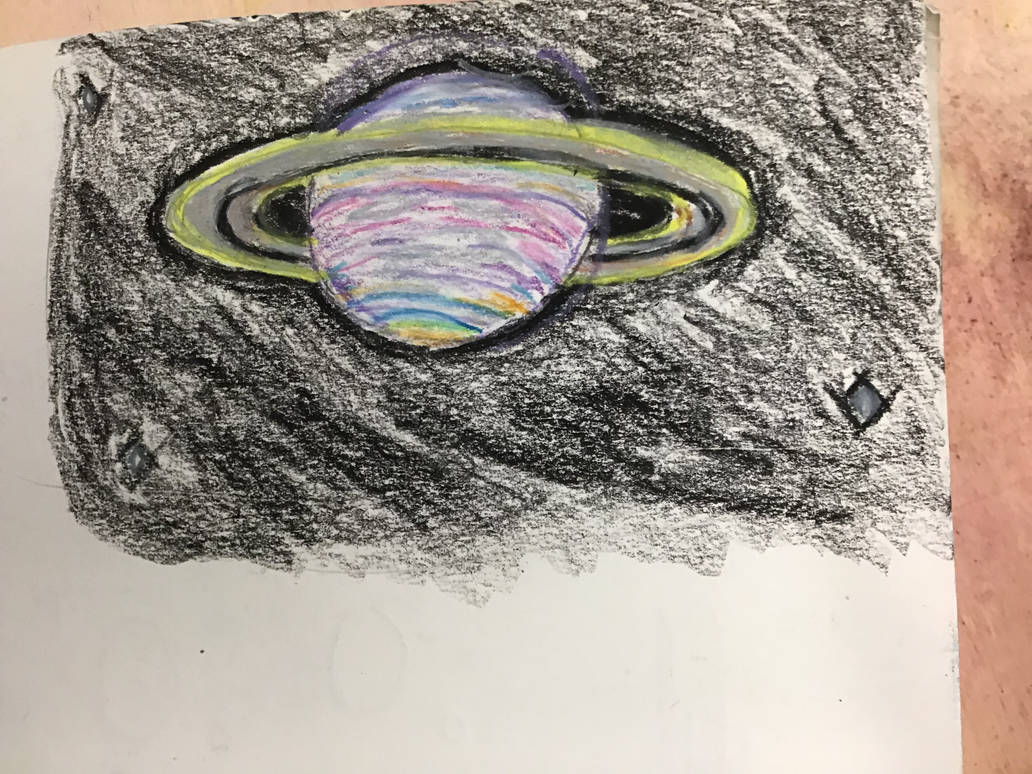
 John's Learning Journal