Completion/ and Nepotism

Here are two Journals in one. I’ve put them together because they interconnect very strongly.


Completing the installation


In a previous post https://johnhawk.art.blog/2019/02/02/my-feelings-about-my-first-weeks-back/ I talked about the installation group task I was given and then unable to do due to none of our group members being avalible to work at the same time and a snow day with no snow.


I prayed that the other members were able to get something done behind my back. Even if I’d had time to work on my own I wouldn’t have had a clue what to do (Or what to use).


Well Monday rolled around and when I got to our set things were not good.  Our leader was not in so we were a woman short, a hanging mobile with orange and black discs wasn’t up or even finished. A video and projector to project a looping video onto the wall were both missing. And there were bits and piece all over the floor.

I bought as a little time by asking we be seen last. But we only had about 20 minutes (That’s not long).

I tried cleaning up the mess for fear of getting in the way if I did anything more complicated. Then I was asked to make the string for the hanging on the mobile. But I was told the lengths I made were too short. In my defence. No one told me how long they were meant to be. Then again, I never asked.

When the time came to hang the mobile it was unbalanced. One of the four strings had nothing on it at all! And then it fell down anyway.


In the absence of a video projection we pulled out an old light projector and covered the top of it with all the cuttings of black and orange acetate (a sort of coloured film. It looks like this  ) that I had gathered up earlier. On the one hand I’m glad it was being put to good use. But it felt irritating having to pull it out after putting it away. Still. It made a nice light show.


And we just threw the mobile and the rest of our materials on the floor.

So, in total. Our “installation” was made up of, four paintings on the wall that ranged from mediocre to awful. A light projection on the next wall where the colours and patterns where made from discarded acetate clippings (Basically, rubbish). And a pile of discarded art materials and a broken mobile thrown onto the floor. Also one marble that ended up in the piece by chance.

In short. A mess, with all the bits that were meant to give it theme and context either missing or broken. What else would you expect for a piece that had to be made in twenty minutes?

So of course the teacher and the other fine art students loved it.

That’s the nice thing about 21st century fine art. You can’t really fail at it. If anything can be art then what does it matter if it’s basically a mess made in the time it takes to watch an episode of The Simpsons?

There is an odd effect where viewers will assume a final piece is exactly the way the artist wanted it and imagined it in their heads. While the actual artist can see hundreds of mistakes, deviations and imperfections in their own work and can barely stand the sight of it. They think us wizards who can just poof something right out of our heads. Even the best artists can’t stand most of their own work. But the public just assumes the product and the vision are one and the same. I suspect this goes to the Nth degree for modern fine art where there are no standards of quality or technical methods. So of course whatever you make is perfect by virtue of its mere existence.


In all fairness, our group representative was completely honest about what it was meant to be, what happened, and what we ended up making.  But none of the people there seemed to mind.

And that’s how the three of us got a pat on the back for failing miserably!


Did I learn anything about teamwork from this?

Nothing that I haven’t covered before…. It’s hard to be a great team when your never in the same room. I’ve learned again that I would hate the army. I can’t stand having to depend on someone-else for orders and ideas. And I’ve learned even the most dedicated team can’t make a masterpiece (Or even something presentable) in 20 minutes.

Now I can guess what a teacher would say to me next, or at least imply. “Okay then. Do you feel you are better teamwork then!? Do you like it more?”

The answer to both questions is no. This was a disaster. And I makes me more certain I am better on my own. At least the people I was working with were nice. But being nice isn’t what makes having a team work. It should be something more than than. Something that makes us more than the sum of our parts. But that happening seems to be a rare event. One you can’t force by shoving four random people together for a week, And one that can’t happen if I’m involved.


Have I gained any artistic knowledge or experience from this?…..

No.

I was basically someone-else’s errand boy during the little time I had to work on this. Doing menial jobs like tidying rubbish or carrying ladders. This was a fine art project and I was just the hired help. The most creative thing I did was make a terrible painting in an hour that wouldn’t be worth throwing on a fire.

Thanks for the experience Cardiff Met. I’m sure that will come in handy when I’m trying to survive in the art world (sarcasm).


There’s one more thing I want to talk about. This would normally go in an extra thoughts journal. But this project has got me thinking about this a lot.


Modern Art is Nepotism


Now I’m using this in the general rather than criminal sense of the word. So don’t be alarmed.

It seems to me that the art world is nepotism these days. Now there has always been an element of this. No artist ever makes it through pure talent. Even western Primitive artists like Alfred Wallis with no education in art or ties to the art world will get noticed by some critic, dealer, or professional artist who then spread word of them to the masses. Anyone who got famous was given a job or a spotlight by someone with means or influence. This even applies to people like Shakespeare or Beethoven. Someone looked at their work and said “I want this” Alfred Hitchcock would never have gotten anywhere if every film studio had turned him down. Maybe the internet and technology will change this but that remains to be seen. For now no-one ever gets big just through being really good.

But at least with old media you had to genuinely be good to last. All the influencers in the world cannot save a bad product. At best you can be James Cameron’s Avatar or the Matrix sequels. Makes a lot of money but basically forgotten or mocked within 5 to 10 years. But most of the time even if the studios/galleries and critics were all behind you but you made bad work it would not help at all. So nepotism was what would get you your break. But you had to be good to have any real success.

When it comes to modern fine art/post-modern art/conceptual art there is no way to make bad art. If it is made by an artist it is good. It doesn’t need to fit any criteria or meet any standards. It doesn’t need to fit any standards of beauty or even mean anything. Sitting in chair can be great work of art if you claim it to be. Just be sure to film yourself doing it so you have proof you did your art. And remember. The sitting in the chair is the art. Not the recording of it.

So if anything can be a great work of art then why can’t I make a huge chunk of money by just taking a walk and filming it? The answer: Status. In modern art your status is what gets you work respect rather than your work giving you status.

When Marcel Duchamp put a urinal in an art gallery he had was only able to do so because he had the connections to do so, albeit under the pseudonym ‘R Mutt’. And when it came under attack he was considered notable enough that his defence of R Mutt was considered worth listening to in its own right. And he had friends, defenders and contacts to back him up who were also considered of note.  If R Mutt had been a real person, some nobody from the New York slums, his urinal would have been thrown out before and that would have been the end of it. Duchamp was clear that there was no deeper meaning or aesthetic value to the work. And to to to do so was vile heresy. All that mattered was that he declared it art. The work itself has no value. The only value it has is that Duchamp “made” it. This idea has been applied to other works of non-art like a tin of an artist’s excrement. A sealed box full of an artist’s breath. And a walk taken by an artist. I have also breathed, excreted, and walked. I do all three almost everyday. Why don’t I have tons of money and a page on the Tate website? The answer is connections. They had connections in the art world. I don’t. Nepotism.

This ties back into the garbage I made on Monday. It had no skill put into it. No value. And anything that could have given it meaning was missing. So why did it get praise from the teacher and the fine art students? Because they new the people who worked on it. And being part of the clique gave it value. Where as anyone who didn’t know us would have not even know it was a single work of art. As opposed to a four “paintings” and a mess on the floor. We did not got praised on any merit in our work. We got by on Nepotism.


One last point I want to make. This last two weeks have been focused entirely on the fine art students. As a group we have been tasked to make fine art things. Video pieces and installations. Even the language is aimed towards fine art. The subtext for us animators has been “Just go along and work in some ideas you picked up in Animation if you want to”. Why wasn’t one of the tasks to make an animation and the fine art students could follow our lead?

I feel like the message being sent across the Field module is that we are second-class students. That we need to be more like them. But this is not true. Unlike modern art, in animation you do have to try your hardest. It’s a skill. You can do it badly. If I can’t get a motion right everyone will see and judge me lacking. If I don’t learn to do it well I will be passed over for more skilled animators.

Why is it I am still being pressured to choose something other than animation? I tried my hand at metal work, screen printing, painting, sculpture, illustration, photography and fabric in the years it took to get to uni. Most of them I did not because I wanted to. But because I was asked to so I could comply with the courses. And comply I have. And every time I turned back to animation. And now I feel like I being pressured to reconsider the mess that is modern “Fine art”. Please stop doing this! How long do I have to try other fields before I am allowed to become an animator!

This hurts.

My strange photos of light

I’m a bit late to this part of the Field module. I started it when I got the brief. I had some good photos too. But then I lost my camera. I thought I’d just forget about it. But it has since been made clear to me that this is a mandatory part of the course. So i borrowed an Ipad and took some photos. Let’s get this over with.


The brief was to take photographs of light and shadow interacting in interesting ways. I decided to approach this by trying to take the strangest photos I could. Playing tricks with the camera to see create illusions or even abstract pictures, and a couple that just look cool. I hope they impress.

IMG_0157.JPG

This is not the moon, or a photo of the sun from space. It’s a disc-shaped fluorescent light up close. You can see it again in the photo below. And yes, the light is on.

For some reason up close the camera can’t show the lit area around the light when the photograph is up close to the light. It will only show the light itself and cast the wall behind it in a darkness that isn’t there. Creating the illusion that the light is just floating in space. I love it!

Also score one for humans. I can see light where the camera can’t.


IMG_0166.JPG

Here’s one where light and shadow zig-zag. This is an open room that turns into a corridor. The room is well lit, but the corridor is only partially lit. Casting shadow into the centre of the picture. Almost sucking you in. The only thing keeping the darkness at bay is the disc light from the above photo. Surrounded by shadow, it seems to shine in the darkness.

There’s also darkness at the top the photo. Where the downwards-facing room light does not reach. And a little dark near the bottom of frame as well.

A room may seem well lit. but it is covered in darkness and shadows.


IMG_0167.JPG

Here’s  another example of the up-close light illusion.  This time using a square ceiling light. The camera is further away this time. Meaning the ceiling can be seen. But it still looks like it’s in darkness. Once again, I assure you. The room is fully lit up. The camera just can’t show it at this distance. I don’t know how it works. But I love the atmosphere it has. Moody but also chill and relaxed and kinda playful. Like an album cover. I could see in on an indie or Prog rock album.


IMG_0164.JPG

Here’s another neat gimmick I came across. What do you think that green light is? Is it coming off the lamp? Maybe it’s a lense flare? Actually it’s light being reflected off the very Ipad I’m using. But perfectly angled to look like the ceiling light is directly causing it, Plus it just looks cool


IMG_0159.JPG

I don’t even know what’s going on here. Not only does this light seem to be shining way brighter than it actually is. But there seems to be a semi-solid halo coming out of it.

I took multiple versions of most these and just showing the best ones. But If you see one the variants I took of this one

IMG_0160.JPG

You’ll see the “halo” isn’t there. But the light is shining even brighter than before.

It must have been something about that specific angle and distance that caused the halo effect.  


Speaking of variants. My friend MacCory was very keep to help out we did a lot of shadow work using either his hands or wire mesh projected onto a wall. Here are some of the best examples,

IMG_0177.JPG

I don’t know why white light turns blue so easily. But the effect here is downright sinister, And the distortion on the shadow causes it to not even look like a hand at all. More like some sort of alien creature.

IMG_0178.JPG

Showing the power of manipulation again. The hand is now in view. But the shadow it casts looks more like the Tower of Sauron from The Lord of the Rings. You would never know a hand was creating this ominous silhouette.

IMG_0176.JPG

And now we have gone back into abstraction. Not only would you not guess that this is the shadow of an arm without me telling you or context. I bet most people would not even guess this is a shadow.

And shadows don’t just come in cold blue. I really don’t know how we got so many colours in here. Orange, red, pink, blue and little touches of green and purple. It seems more like a gentle watercolour painting than a photograph.


As I said earlier. MacCory also helped me do photos with wire mesh shadows projected onto a wall. Out of all of them, I think this one is the best.

IMG_0183.JPG

Once more, totally abstract and I love it. It looks like another album cover. But this time more like something from an industrial rock band or an experimental musician.

There’s a rhythm and an elegance to these harsh shadows that I find quite haunting.


IMG_0171.JPG

But I did do more figurative work as well.

There is no illusion with this one. Beyond maybe getting a good angle. Avias was working late after everyone else had gone home (Apart from me). She hadn’t turned the lights on, so she was illuminated by the glow from her monitor, Her deep black hair blended in nicely with the shadows. Making it look like her face is floating in the darkness. It gives her an oddly calm and angelic look. I like it.


IMG_0184.JPG

Light is a very tricky thing. Here is a corner that divides two corridors. One lit, the other not the difference is almost literally night and day. All I had to do was zoom in and this plaster structure starts looking like painting or even some kind of flag. So precise is the divide of light from dark. Of black from white.


IMG_0186.JPG

This might be my favourite illusion. It seems to be a view of nature at night fenced off from a street. But in the top left corner there is a row of computers  in a well lit room. How can this be? Is it a collage? Did I edit this in photoshop? No! I never learned how to use photoshop! All my pictures are unedited and taken in the moment.

This photo is taken from window next to my desk, looking down onto the park. The row of computers is in the room behind me The bright lights turn the window into a semi-effective mirror. But I am blocking out most of the light Allowing the camera to see the view bellow. In fact you can see my rather distorted hand near the bottom left corner. It’s a neat trick and just a cool looking image over all.


IMG_0162.JPG

Here a good example of how light can take a away an objects definition. Look at this radiator. The top half of it is in shade and the lines of the grill are in sharp relief. But down below where lit is lit up the lines just fade away. I like how the shadows zig-zags with wall. It’s not what you’d think. But that’s life. I always has cool surprises for you

.


IMG_0173.JPG

And finally this is my favourite pic I made.  It’s of the two overhead lights in the Heart space (a sort of breakroom/common room in the animation block) at night. Even when all the lights are turned off there’s a small green light that glows in one of the overhead fixtures I don’t know why it does. Maybe as a safety precaution? But it looks beautiful. It casts an eerie, mystical glow onto the other fixture and the wall behind it. It’s like nothing-else I’ve seen. So faint but so peaceful. It’s this magical little secret that people pass by everyday and never know is there.

By rendering of it here has reduced it to its simplest components A light, a disk, and faintly illenmened wall somewhere behind it. I has a nostalgic quality to me. Like the first time you see a real full moon. It reminds me of music of REM. Sad, but fun and a little exciting and comforting.

This one makes me genuinely glad I did this exercise. It has enriched me both artistically and personally. So for that it has to be my favourite one here.


And there you go. I put a lot of effort into this journal. I hope it was worth it.

Constellation writing task

I have been asked to describe a picture I picked for this writing exercise in two different ways. “In its own right” and “As it appears in experience”. I assume the point of this is is to bring home the distinction between what you see and what you know. And the difference between the idea being conveyed and the marks made to to do it. But I’m just guessing there.

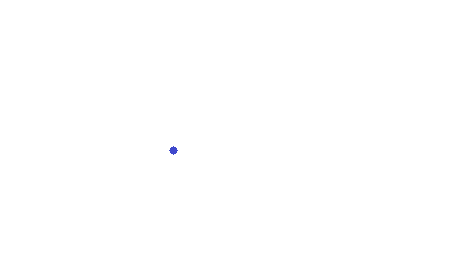
The image I chose was a simple doodle done in Microsoft Paint so I wouldn’t have to put too much effort into this exercise. It is of a single blue dot, shown below.

Blue Dot by Hawkbittern

Sadly. I feel my attempt to be lazy might have backfired.It certainly generated a lot of discussion in the group. This is why I hate postmodernism nothing is allowed to be simple anymore. Everything has to be torn apart in search of a deeper meaning that isn’t there (And normally just serves the theorists ego). While work that has actual time and effort put into it gets ignored because it has a an identity and themes of its own. Why can’t a man just be lazy!


Anyhow the criteria.


What is the image in its own right?

The image is a bitmap picture of a cold, darkish blue dot. Against a white background. It is near the middle of the middle of the picture vertically. But very left of centre horizontally. The dot is made using the spray-can tool. Sprayed into solid colour. It looks circular from a distance. But in keeping with pixel graphics it is very jagged and not very circular at all when looked at close up. Even at a medium distance it’s not very convincing. Four pixels at the top, bottom, and sides stand out awkwardly.making it look like straight lines are coming out of the dots.     

The white background has no features to it.


How does the image appear in experience?

One sees a crude pixel rendering of a blue dot, just floating in a white void. It doesn’t appear to be in motion. There is nothing around to show where it is or how it got there. In fact there doesn’t seem to be a “there” for it to inhabit. It’s more of a blankness on the screen. It’s a bit disorientating to look at because it’s hard to tell where the picture starts if it’s on a white background. If it’s not on a white background it looks like a blank piece of paper with a smudge on it. This shows the importance both literally and figuratively of having your work well framed if it is to have consistent context in different mediums and situations.

But that’s me critiquing it as it’s maker. As a viewer I’d say it’s dull and generic post-dadaist/minimalist art with a bland choice of colours that anyone could make. It’s boring. The only thing about it that makes it slightly interesting is how the dot is off centre. But that just robs it of symmetry. Making it even uglier. It’s that little bit of effort and imagination that shows just how lazy it is.

Unlike my classmates I do not see it as standing for something else. It’s a dumb abstract with no artistic intent. I have made way better works in MS Paint. Such as this

Jazz by Hawkbittern

But they weren’t so easily reinterpreted by pretentious postmodernists. So they would not get so much praise.


If I had to liken my blue dot to something it would be a floater in the corner of my eye. Annoying and slothful. And that makes me hate it even more.    


Final thoughts

This was an awkward exercise. I’m still kind of glad I went with the blue dot. The trying to define the nuanced difference between objective analysis vs subjective experience of a work of art is something that takes a lot of self mental deprogramming. It’s hard work. And the more complex the image the longer both descriptions would be. This is the sort of topic that can take weeks to cover. So giving myself a simple task still did save me a lot of work. If I’d picked a Turner or a Goya this essay would be 8000 words long. So I still did manage to be lazy after all.

But on that subject. I do still feel a bit annoyed with myself. I realised a bit too late that I could have  come up with something simpler. If I had just mad my MS Paint work a simple block of one colour that would have been a lot more in line with minimalist ideas.

[Citations to be added later] I see now why the Minimalists never used brush marks or colours inside other colours. Either of these things will draw the eye away from the piece as a whole. And individual marks will invite figurative readings just by having their own separate existence beg to be read as things. A circle was a particularly poor choice on my part given how many associations a circle has. One maybe one mark was worse than several marks. Several marks could make a pattern which could be seen as a thing in itself. Even if it wouldn’t be Minimalism proper.

I wanted to make a minimalist work to save time and to avoid there being a distinction between the subjective and objective interpretations of the work.  I managed the former but not the latter. My fellow students were all over the work with reinterpretations. If I had just waited a bit longer and remembered and applied the minimalist theory I learned last year I could have saved myself the embarrassment and writing all this out. I managed to fail at being lazy, and gave myself more work than if I had put in a bit more effort.

It reminds me of something I read in CS Lewis. I think from ‘Mere Christianity’ [Citations to be added later]. It went to the effect of

“Who has to do more work. The boy who studies hard or the boy who copies off him? In the short term the student who burns the midnight oil has to work much harder. He will feel stressed and burdened while the cheater feels at ease. But when finals roll around the it is the studious one who will have it easy and the copier will be lost. For the student who studied will know the method to arrive at the truth on his own while the lazy one will not know how to work on his own and have to learn the right way to methods at the last moment and without help from teachers”.

My feelings about my first weeks back

This has been crazy. Both the pacing and the work has been all over the place.  


I missed my first day back due to circumstances beyond my control. The second day

I was allowed to make drawn on film animation. I talked about this extensively in my Journal ‘Holy Relics’, linked here.

https://johnhawk.art.blog/2019/01/17/holy-relics/

And then for the rest of the week I had nothing to do. The only part of note was getting some minimal feedback on my final Constellation essay and a writing task to give feedback to myself, linked here

https://johnhawk.art.blog/2019/01/22/a-reflection-on-my-constellation-essay-and-my-future-in-constellation-or-i-have-no-idea-what-im-writing/


I covered the second week’s field exercise in detail in this journal 

https://johnhawk.art.blog/2019/01/29/my-first-real-week-back/

The next day I came in to try out the workshops that have been so vigorously advertised in our emails. But when I arrived I found the class postponed indefinitely due to our room being taken by someone-else. Instead I found myself given online reading material I could have just looked at at home and no practical work at all.

On Thursday I had my first day of my new constellation class. And I found I hated it. I can see constellation is  going to be even more of a drag this year than it was before.


Now moving on to the third week of The new term.


After two weeks were field seemed to involve no collaboration The third week hit me like a tidal wave. I suddenly found myself in a group of people I knew nothing about and tasked to make a film with them?

I felt no urge to try to get my voice heard over the short-haired six-foot tall woman who designated herself our leader, I think without even knowing she was doing it. I merely sat on the sidelines, offering glib remarks while wearing a paint bucket on my head to try to weird them out. It didn’t work. But somehow I ended up in the as the only human in the film. Playing the aforementioned paint bucket like a bongo. I emulated Ringo Starr and just went with the flow while playing the drums. I don’t think the other students liked our film. But the good thing about having no standards is it means you can’t fail. But that was just Monday.


On Tuesday we we put back into the same groups and told to make an installation that used elements of 2D, 3D and 4D art. This project was supposed to last the whole week. But things didn’t go to plan. I had enough time on Tuesday to make a pretty terrible painting (It was A1 paper and it had to be done in an hour. What did you expect?) Then I had to go home.

I had two workshops to attend on Wednesday. And it felt nice to be doing real work relating to animation. But two workshops in one day was a lot to take on. I promised I’d meet up with the rest of group at midday. But when I got there I found only one other member had turned up. And she didn’t think it was worth doing anything so nothing happened that day.

Nearly all of Thursday was given over to Constellation. Again, it sucked. I was hoping to get something done after constellation. But Owen was insistent I come to a lecture he was giving to explain how constellation is valuable to our animation. So I got no work on this installation done then either. And on top of that the lecture didn’t make the self-indulgent academic misfire that is Constellation any more justified. Or even put forward an argument as to why it could be. Owen is still a better lecturer than the actual constellation tutors. But he only gave his own thoughts on modernist art rather than show why I need to be studying anthropology when I should be working on Field.


And on Friday campus was closed due to non-existent snow. (At least I didn’t see any)

So on Monday I have to go in and present and talk about then write an essay on an installation piece that I had barely anything to do with and might not even exist!

This is not good enough. I’m being pulled in multiple different directions by different college departments who all think I can dedicate all my time to them. It’s not that it’s the highest workload, I’ve had worse. But it’s totally unbalanced and uncoordinated. In a good course if I needed a full week to make a big project the rest of the week would be cleared so I could do it. But as is I have to make the time. This crammed balancing act actually feels like more work than a busier but simpler schedule would.


I have some other complaints.

This “collaboration” exercise is a joke. For two reasons.

Firstly. Being left to direct ourselves sounds good until you realise most of us are never free at the same time. We’re usually not even in the same building. And if our leader isn’t in (like on Wednesday) then we can’t do anything. We’re lost. This would be less likely to happen if we were all doing the same module, or given space in our timetable but we got neither.

The other complaint is the though this is meant to be a collaboration between the Animation and

Fine Art students, the exercises are purely Fine Art focused. Turning me into a third wheel at best and someone-else’s slave at worst. I don’t even like modern “Fine Art”. Why am I being conscripted into someone-else’s vision at the expense of my own? I’d be angrier about this if I had time to do the the drudge work I was given. But in this instance one bad idea got in the way of another. But seriously. This is not a teamwork exercise. It’s an unpaid internship to the “Real” artists. And next week I have to write a critical essay on this disaster.


Which brings me to my final complaint with the term so far. In Field I’m stuck “Collaborating” with the Fine artists. And in constellation I’m listening to pseudo-science about how smell is more important than sight. I’m not doing any animation here. I’m not even studying things related to animation. This is not what I signed up for. WHY AM I HERE!?!?!?!

The only things related to animation going on right now are the voluntary workshops. I feel like I’m back at school again. Doing subjects I didn’t ask for. Stuck interacting with people I don’t know and have nothing in common with. And trying to fight for my own path.

I’m really worried about my future. If my will to work collapses I don’t know what will happen. I’ve flunked out over less. I don’t want to drop out again.


Help.

On Exploring a Subjective Reaction

On Thursday of last week my new Constellation grope we tasked with doing an experiment where we smelled two different containers and saying what they made us feel and think of. With the first one I surmised correctly that it had spices in it and wrote accordingly.

The second container was where things got interesting. I took a sniff and the first thing that came to my mind was swimming pools. Specifically the chlorine smell they have. Now I felt certain that what I was smelling wasn’t some form of dried chlorine. In fact the thing I was holding didn’t even smell much like chlorine. It’s just that it reminded me of the chlorine smell.

I felt sure deep down it was probably something plant based, and I was right, it turned out to be mint and cucumber tea. But I decided rather than record my reaction to what I thought it was, I would be honest and write my reaction to what it made me think about.

Smell of chlorine can make me feel a little nervous. It reminds me of the moment of anticipation before I would get into the pool. Normally it makes me happy. I like the smell of chlorine. It brings back a lot of happy memories of swimming. But if it was making me feel anxious this time I would be honest about it.


There is a long running debate as to whether things can be objectively known or not. People on both sides fill fight to the death. I suspect it usually has less to do with reasoned arguments and more to do with wanting unshakeable ground on which to stand.

If all truth is subjective then one does not need to change one’s mind on anything. If all opinions are equally valid then the opinions YOU hold are 100% true.

If the world is objectively knowable it means as long as you are right you can treat anyone who disagrees with you as a moron. It would mean if you are wrong other people would have the right to do the same to you. But all you have to do to avoid that is never be wrong about anything, which many people believe they are.


I am closer to the latter camp. I am with Descartes. I know that I exist. This cannot be disproven. Therefore there is objective truth. The laws of mathematics also seem immutable. No impairment of the senses can stop 5 X 5 from equalling 25. How much else is objectively knowable I can’t say. But the truth IS about there. And we should search for it rather than ignore it.


So then. Why did I choose to record a series of thoughts that don’t adhere to reality?

Well, being human is strange. Our feeling are strong and it’s worth trying to understand them. I recently read ‘A Grief Observed’ by C S Lewis. In this book Lewis is angry with God for the death of his wife. In a moment of passion he accuses God of being a cosmic sadist, or of having a morality totally backwards to our own. These feeling cannot change God, or if you prefer, could not make God more real. But these feelings were real even if the conclusions they came to were wrong. And Lewis felt acknowledging these thoughts and feelings important enough to publish them in a book. The point wasn’t to prove or disprove the existence or goodness of God. But the make an honest recording of deep grief and what it does to a man of faith.

I stand by belief that the world can be known. But one has to be honest about who one is. Even if it means your tutor laughs at you now and again. The alternative is to not be truthful. And I don’t like to lie just because it’s convenient to myself.


So. Did I learn anything  from being honest about the tea and what it made me think of?

Not really. But that’s life. Sometimes your ideals give you zero sum game. You just gotto roll with it.

My first real week back

It’s felt weird coming back here. I don’t have the drive to create or push myself as I used to. Let’s hope I can turn it around.


Monday:

After a reintroduction week that was a bit too lax for my liking, Monday through me to the wolves. We were tasked to make an avant-garde sculpture with movable parts. To be made out of wood, metal, and other industrial materials. And it had to be done in one day! The movable parts were necessary so it could be filmed the next day as part of a group animation collage. All of our sculptures are to be animated, then the animations will be compiled into a film.


We were shown a selection of 20th century sculptures as possible guides. I found them all very ugly and not at all inspiring. But I did notice one name that stuck out to me Naum Gabo. An artist hold in esteem. I thought about it and decided to take inspiration from his ‘Spiral Theme’ work.

Irregular, imperfect, and haunting

I too would use the spiral theme. It is instantly recognisable, simple to make, and it would make for interesting movements. More than a little cynical on my part. But I had a tight deadline to meet,


It only took me few minutes to have the thing designed and planned out in my head. That’s the beauty of my mind. It can visualise things quickly. But I had help. The teacher in question, Sarah,

Gave me advice on what materials to use and how to put them together, without which I would have been lost. For that I am extremely grateful.

I used to study sculpture before moving to animation, But I was extremely rusty. And I was never great at woodwork. My drillwork was sloppy, My attempts to get things the right size or length often backfired spectacularly. And in one embarrassing moment I cut the wrong piece of wood off. I was able to counter all these mistakes in the end. But I think all the adjusting meant the sculpture came out smaller than it should have. But it came out pretty much as I imagined it. An asymmetrical disk with a pattern and surface similar to a cockle shell.

I like it. The design echos early abstract sculpture of the type in the time of Gabo. But it is smoother and gentler. Like a thing out of nature. It has an air of mystery to it. And the way it spins around reminds me of a toy.


There are two bits of fin-shaped mesh on either side. Part of the brief was to make sculptures that would cast interesting shadows. I focused on making it move. But the fins will make sure there is some shadow on the thing as well as underneath it.

At the last minute I added a plasticine ball to the top. Partly to make it more asymmetrical. And partly to echo a pearl. To add extra weight to the shell influence. (The “Pearl” rolls around the disk in the first animation but not in the other two).

Even some of my mistakes came out in my favour. The hole in the centre of the work is at an angle thanks to my poor drilling. Meaning the disk is at an angle instead of being parallel to its base and the surface the base is on.. But I like that. It looks cool. And it gives it a more organic look. In keeping with the shell theme.

The dick itself is made out of a cardboard base with foam tubing making its body. I had a lot of fun putting it together. But I had to glue the foam on, and near the end I burned myself with the hot glue gun. That was not so fun.


I have been told that I should be taking photographic evidence of my physical work as i make it, like I did in my sculpture days in local college. I wish somebody had told me this earlier. Like say last September! Never mind. I’ll do what I can. I hope for now this written account of the work will do.

But I don’t see the point. These journals are supposedly for showing my growth. Showing the nuts and bolts of making the art just gets in the way. Maybe I’ll put those bits in seperate folder. Filled as “tedious rubbish” perhaps. It’s certainly boring and uninformative to write about. I can’t see how it would be fun to read.

Also I guess I need to buy a new Camera. I lost mine last year. This sucks.


Tuesday:


The next day I put the final touches to my sculpture and took it down to be animated. I was again working alone. So far this collaboration project hasn’t involved much collaboration.

I was very stubborn about needing a tripod to film smoothly. With one secured I started filming. Turns out I was a bit out of practice when it came to stop-motion. Despite my best efforts my speed and pacing were off. Some continuity mistakes crept in. and most embarrassingly a LOT of frames have my hand in them. I was able to dial it down a bit as I went on.

To make it extra animat I made the ball roll around the disc in the opposite direction to which the disc was spinning. This required a lot of hard work and I wasn’t able to make the speed of it consistent. Hence why I let the ball stay static in the other two tests. But I still think it looks good.


For the second test Morgan was keen I do the animating while holding the camera. This sounded like an insane idea, It would be impossible to get consistent footage. So I decided to not even try. I filmed as badly as I could. The camera is indeed all over the place. But Morgan actually liked the result. And strangely so do I. It has a manic energy that my work normally doesn’t have.


Fiddling around with the program settings I found that the camera had been filming on twos. That’s why I had gotten so much done in such a short amount of time. While I was grateful I was also annoyed. I like to film ones where possible. So for my third test I vowed to do the whole thing on ones and get a large chunk of footage while doing it.

To try to get some interesting lighting and shadows I turned off one of my lamps and put a blue-green plastic filter over the remaining one. None of the that tinting in post nonsense for me. Do it right or not at all.

To try to get a nicer result I timed the movements very carefully. I wanted to keep the disc turning at a constant speed. Like a wheel. It didn’t really work. The end result looks janky and a bit stiff. But it still has smoother animation than the first two tests.

The smoother movement and blue-green lighting gives it an ethereal, unearthly look. I like it a lot. Maybe I can use it as inspiration for something else down the line.


Anyhow. Here are all three tests in a single video. Enjoy!


Once again McCory helped me edit it on the computer. But I was able to do parts of it myself and uploaded it to youtube on my own. I think I maybe be starting to get the hang of this whole computer editing thing. Let’s hope. I think up loading many small projects and getting used to the process is the way to go. Let’s hope I have something good soon!

A Reflection on my Constellation Essay and my Future in Constellation. (Or I have no idea what I’m writing)

I have been asked by my lecturer from last term to reflect on these two points. The essay I wrote for the end of term on Dan Flavin [Linked here https://johnhawk.art.blog/2018/12/12/an-essay-on-dan-flavins-untitled-to-barnett-newman-two/ ] and how I can adapt to make my next constellation course better, so I shall oblige. These are meant to  be reasonable reflections on the theme of “How will I solve my problems? Well, to do that I’ll first need to figure out what my problems are.


Well the first problem is easy enough to diagnose as it’s been done for me. Both Professor Clarkson and my support worker have pointed out to me that my referencing needs improvement. The problem I have been told about is my referencing needs work. I am not used to referencing at all (Despite some mild attempts on this journal) and I have a few stumbling blocks. Firstly, when I read for reference I’m not good at taking notes, meaning I don’t remember on which page or even sometimes which book I get my info from. I need to start taking notes as to to the right pages. I guess this is why people underline things in library books, that said, I’m still only going do that in books I own.

This in turn means a lack of references in my text. I’m assured they don’t need to be long references, they don’t need to interrupt the flow of the text. Just little bullet points. But If I don’t remember where the thing I want to reference are that doesn’t help.

I will try to be better about this in future. But the problem is I don’t know in advance if something I read will BE useful. It’s only later when I’m putting my thoughts together that certain things stand out as worth referencing. And I don’t know how to fix this.

Some things have been given examples of what I should select when writing. For Instance:

I mentioned that Mondrian was a hero of Flavin’s.But didn’t say were I got that from. But I have wonder why this was a an oversight but not when I mentioned his love of Barnett Newman or Vladimir Tatlin? The other piece of direct advice I’ve been given is when I quoted Flavin saying “It is what it is, and it ain’t nothin’ else” I should have given the book and page number. It hadn’t occurred to me to site quotes from the artist in question. I guess I just thought of them as the source. But in the future I’ll be on the lookout for quotes and influences. Though I fear this will lead to me taking a bunch of useless notes. Which is an idea I detest.


So. What other problems could I tackle on the subject of my essay? I don’t know. I was hoping to get feedback from my tutors rather than from myself!

The only way I can look back on my work with any authority is through hindsight. Which means waiting, which I can’t do here. The best way to get hindsight is to have more than one experience reflect on. A catalogue of work to look over. Does this mean I should write even more essays in the same style? I hope not. I don’t have time for the level of research in private projects and I hate the 1000 word limit.

The only thing I can think of is that while /i’m getting good feedback I’m only getting good feedback. I’m not wowing anyone. But again. I don’t know how to fix this without feedback from others or extra practice.  

All I can truly prescribe for myself right now is passion. People make their best work when they passionate. I appreciated my essay more like a surgeon removing a tumour. Something to be done thoughtfully and carefully to avoid a future disaster. If I could find a way to engage my own passion into this work it might have a greater chance to make a big impact.


With that done let’s look towards the future. My upcoming Constellation module. How can I adapt or do things differently so it’s easier for me this time?

Not the easiest topic. I tried to do my best last year. I don’t think anyone could accuse me of phoning it in. Well could always try to do my reading in advance. Granted we aren’t always given our reading in advance. And I still have the same workload. But maybe by doing this I could spread the workload out a bit?

I could try taking notes in class again. Granted every time I’ve tried this in the past I’ve just forgotten my notes right after writing them. But maybe I could try doing something a bit different? Or maybe it I just checked my notes I’d find they had something useful in them (But I doubt it).

It has also been suggested to me that I don’t need to do all the suggested reading. That I can be a bit more selective. I can’t say this comes naturally to me. But I’ll keep it in mind for if I get truly swamped.

I could maybe try to view the module as a whole with an arc. Rather than just taking it one week at a time. Maybe that could give me some extra perspective?


My biggest issue last term was simply that I was bored. Constellation seemed like a giant waste of time and irrelevant to my animation work. I was legitimately shocked when I found out it was supposed to help me with my real work. Now that my Constellation subject isn’t even art based this problem is just going to get harder. I don’t see a way to fix this. I’m sure anthropology is interesting but it’s b

Not something I’d willingly study in my own time. The problem isn’t me. It’s the course. The whole Constellation system is counter-intuitive.

I imagine someone-else would suggest that I could make it more fun by trying to link it back to animation myself. And I already want to punch that person in the face.

Why am I being asked to fix the course I’m attending?


I could try to have a more positive outlook on this all. That might help me cope with it all. But I’m feeling too grumpy.


I occoures to me as I write this that it’s hard to think of ways I can improve my constellation work when I’m too busy trying to write about ways to improve my Constellation work. Maybe writing helps other people think through their problems. But for me I can’t focus on finding solutions to my problems because the writing is hard enough.

Fuck my life.

Holy Relics

First journal of the year.

On my first day back I was tasked to do something awesome. I was asked to make some short animation by painting onto 16 Millimeter film.


This was a dream come true. Drawn on Film animation is a classic style that has made many unique short films. It was a favourite medium of the Mozart of animation, Norman Mclaren. Here’s an example of his work.


So I was hyped to get to work. I was given enough film to make 12 seconds of footage. Though I only made about five seconds.

This will be added to a short film made by the the class. Each one of us has made footage in this style and the result I’m sure will be a very interesting abstract collage. I hope to be able to upload my little piece of footage on it’s own in time.

I had great fun making it. I hope to do more in this style.

While I was doing it I found myself working with a fellow student named Dan. He was also behind on work and like me was catchin up on this project. He seems to have been battling with the same agoraphobia and anxiety That I have been dealing with for the past four years. In fact the reason why I had never met him was because like me back in 2016 his agoraphobia had stopped him from coming into class for a whole term. I give him what advice I could on dealing with it and I hope he can learn to live with it. I’ll help him if I can.


The main thing I want to talk about was what happened after I stopped animating. I was pretty tired by the half past two and want to call it quits. So Tom came in and manually cut the film and added it to the existing film footage. Genuine 20th century low-tech. It was strangely elegant in a lumbering, manual way. Certainly more exciting than computer editing. Afterwards he wound the film onto a reel.  I asked if I could hold it. It seemed strange to me that dispite having been a film fan since I was thirteen I’d never held or even seen a genuine film reel. Holding it felt strange, but nice, almost like coming home. It had a nice weight to it. It was strange to think this circle of metal and celluloid was or at least contained a work of art. And that all the great movies I loved from the past were made of several of these things. So small and unassuming. But containing great power.


But that was just the start. Tom took me and Dan to a room with an old fashioned film projector. An elegant machine virtually unchanged from the sort used a hundred years ago. Once again it was strange and exciting seeing one of these things for real for the first time. I imagine that this must be similar to how people in the middle age felt upon seeing the relics of great saints. I can see the impetus for movies like Last Action Hero and Purple Rose of Cario. This thing really does feel magical. The whiring sound and the flicking light that I had seen so often in movies but never actually experienced made me feel like I was actually in a movie myself. Tom said that he thinks classic film will never really go away. That’s like Vinyl and CDs. A I thin he might be onto something.

I love being around these holy relics of cinema. I could get used to working with them.


When the film rolled and we saw our animations play it was wonderful. I got a little too excited when I saw my little fragment on screen.  A long time ago my drawing teacher, Van Howell, asked me what I thought it felt like when you do a really good drawing. After I made my guess he told me that after doing a great drawing you want to do another one. And that’s how I’ve been feeling about the drawn on film animation. I want to do more. I think about coming in just to do it. Maybe I should. I’d never considered this could be for me. But i guess that’s why you go to uni. To have your mind expanded. And sometimes it even happens!


An Essay on Dan Flavin’s ‘Untitled: to Barnett Newman two’.

The hardest part about talking about Dan Flavin is trying to put it in context. The look of Flavin’s work has been absorbed by our culture and now has a lot of associations with it that never would have occurred to the artist or viewers at the time. Flavin’s style is seen in movies, music videos, and video games. And as a result, is also connected to music and books associated with the above works.

It’s lost the identity it once had through its own influence. Depending on how you want to view it, you could call Flavin’s work irrelevant or transcendent.


‘Untitled: to Barnett Newman two’ is a Situation piece (As Flavin coined his works. Many today call them installations) made of fluorescent lights in a rectangular shape. 8 feet high and four feet across, placed in the corner of a room. The horizontal lights are yellow and face toward the viewer. The vertical lights are red and blue on both sides and face away from the viewer.

All of Flavin’s most famous works were made with fluorescent lights. And he often put his Situations in corners, or other unusual places. But the portrait-like rectangular shape wasn’t something he used often. It’s almost unique to this series Flavin made in honour of his idol, Barnett Newman.


The experience of seeing a Dan Flavin is an immersive experience. It isn’t just in a room. It changes the room. If the room is darkened and only has only one Flavin in it (The correct way to install a Flavin) It transforms the room. It even becomes the room. To say that a Flavin is just the light fixtures is missing the wood for the trees. The walls turn into a canvas of Purple and blue light. The coloured light around the fixtures are as much the artwork as the fluorescent lights themselves. A Flavin is not an artwork when it’s turned off.

The Light fills the room, taking it over. Giving it a unique atmosphere. And the light seems to fill the very air itself. So you feel almost like you art inside it. An artwork made of intense, cubic, volumetric space. As immersive as water.


Flavin started out as a painter. He made abstract works in the vain of Franz Kline. But he also made paintings with text inside them. Using poems. Or in one case, a passage from the psalms. While Flavin did not hold much in the way of religious beliefs, a love for it would persist throughout his work.

He became enamoured with Russian Constructivism. Particularly Vladimir Tatlin who became one of his greatest idols. He particularly loved Tatlin’s ‘Corner Reliefs’. Sculptures that would be hung or fixed in the corners of Rooms. These were inspired by Russian religious icons. Which were placed in the corners of household rooms.

He was also influenced by Barnett Newman. A modernist painter who worked within the confines of rectangular shapes. Flavin avoided using rectangles in his work, so as not to seem like he was copying Newman. After Newman died Flavin made a series dedicated to his memory. Finally using rectangles as homage.

He took elements from all these influences to make his ‘-to Barnett Newman’ series. Some of his simplest but most sublime works.


Flavin’s work can seem intimidating up close. ‘Barnett Newman two’ is no different. The lights hmm and whir. At a full 8 feet tall the piece looms over and threatens to consume the viewer. But seen from a distance there is a sense of calm to the piece. The lights are harsh. But the colours are calm and soothing.

In an almost humours fashion Flavin has taken the colours of his hero, Mondrian. Red, yellow and blue. And used them to make a canvas of gentle magenta and calm cyan. The yellow lights end up just adding some warm white to the piece. Keeping it from looking cold.

The fact that the unseen red and blue lights are more powerful than the visible yellow ones tells us of the power of the unseen over the gaudy. The divine over the material. As well as on a simpler level. The strength of lights on a surface instead of in the air.

The way he has turned Mondrian’s primaries into a piece dominated by purple shows the transformative powers of light and surface. Turning lighting into an alchemy.

The piece is clearly flat. But it is in the angular confines of a corner. This is a contradiction. But both have symmetry. And the light binds these two symmetries together. Creating harmony. Both transforming the space, and radiating piece into the room. Much like the Russian Icons shining a divine light into the home. Like God’s presence transforming the lives and minds of people.

In fact, the very shape of the work is not unlike a door or window. Promising to take us into new world of peace and harmony. It’s a long way off from the cold and cruel portrayal of neon in science-fiction films.


Flavin didn’t see his works as having stories to tell or alluding to other things. He once said of his work “It is what it is, and it ain’t nothin’ else…” So it’s hard to try to read greater meaning into his works without being pretentious and self-serving. But maybe even in this there is something to work with. A simple thing in and of itself. Still, unchanging and harmonious. Like the presence of God. And like a religious icon ‘Barnett Newman two’ Invites us to put ourselves in that stillness and harmony. Pulling us into something simple and divine. Making us one with the world.


I haven’t been able to find any evidence that this, or any of the others in the Barnett Newman series have had any legacy or influence on the art world. Flavin is an extremely influential artist. But he’s more Tangerine Dream than Paul MacCartney (In fact the visuals of Flavin’s work would fit well with Tangerine Dream’s music). His body of work is bigger than any of his individual works. I could talk about Flavin’s legacy. But I think It’s okay to say that just because a work is not influential that doesn’t mean it’s not valuable.  Movies like ‘The Uninvited’ and ‘The Congress’, or books like ‘Urchin of the Ridding Star’s maybe not be influential. But they are great. And they are classics in my book. And so is Dan Flavin’s Barnett Newman series.


Reference list:

Weiss, J.(Ed) (2006) Dan Flavin: New Light. Washington: Yale University Press

Zwirner, D., (2015) Dan Flavin Corners, Barriers and Corridors. New York: David Zwirner Books


A look back over ‘After Modernism’.

I’m supposed to talk about what I have learned from this course and what I’ve gained from it as an artist. But as an artist I feel I’ve gained nothing. These constellation courses aren’t well designed for university students with their own vision.

I’ve proven my knowledge of art time and again. In A-level art and Art Foundation just for a start. I’m at a stage where I need to learn by doing. Not by reading. To quote Desmond Tutu “You learn to swim by swimming”. This is just taking me out of the metaphorical water. Wasting my time and stunting my growth as an artist.


If I have nothing good to say about the module as an artist, can I say I learned anything as a person? I’m not sure.


I knew many of the artists here. But had never read their writings or those of the theorists who inspired them. But the experience of reading these overlong, overblown, theory pieces has been one of the most joyless and frustrating reading experiences of my life. It didn’t enhance the work for me, it did the opposite. I now respect some of the artists involved less for it.

Beneath all the fancy language there is a degree of pettiness to all these journals, worthy of a modern Twitter feud. Everyone claims their art is the purist, or in some cases the only real art at all. And everyone thinks they are the final word in art. History ends with them. Only Donald Judd escaped from this narcissism unscathed. And even he couldn’t escape all the snide bickering that went on between these supposed mature adults.

When people are sniping at each-other for adding one brush stroke of paint, or even using paint at all, it suggests something has gone wrong. Rather than being a cornucopia of creativity the art world became a collection of dogmatic cults where any deviation spells hysteria and anger if you are a heretic, and excommunication if you are a follower.

It doesn’t help that some of it is barely readable. There is so much deliberately over-complicated writing that it can take hours to read. And when deciphered it’s dry and bland once you strip out all the ego-stroking and infighting. The reasons why these art works exist tend to be less exciting than the ideas you had in your head. But when art is made to be pure art and nothing else how can it not be cold and emotionless? An emotion would point to something that is not art. And alluding to things outside of the single artwork is forbidden. That’s how the old art worked.


The fact these manifestos and Journals were read so avidly baffles me. The theories are always so boring and honestly, very samey.

Besides. The work is always infinitely more powerful than the writing behind it.


So, the main thing I’ve learned from reading all these art journals and manifestos is that I hate reading them. Followed by them not feeling relevant to the works or even antithetical to how the works came out.

I don’t even find that my feelings about 20th century art have changed. I still like the artists I like, and still dislike the ones I disliked to begin with. But I already knew it’s almost impossible to change a person’s view on an artwork by force of argument.


I’ve also learned I find the artists more compelling than the movements they were in. When an artist is good it doesn’t matter what movement they belonged to. Though I’m certainly more likely to appreciate an artist from movement I like.

Movements come and go. But the artists who worked in them remain powerful and relevant long after the ideas and rules of the movement have been forgotten.

More, even in their own lifetimes these artists keep on making great works long after the movements they are associated with have faded away.

But do these movements at least act as a useful springboard for these artists? A way for them to find their voice and get some notice before stepping out on their own? I don’t know. I can’t judge with the limited information I have right now.

But when you consider how many great artists from before, during, and after the 20th Century were not tied to specifics movements, you have to wonder if these movements even matter at all.


One thing I have learned about myself is I usually find these journals a lot easier to read if it’s by an artist I like. This is not always the case. Robert Morris’s manifesto on minimalism was one of the worst reading experiences of my life. But when reading books on Dan Flavin for my final essay I found my enthusiasm for him helped enormously in understanding the more theoretical side of the texts.

On that note, I feel glad that I was able to do some classic book reading. I forget how much fun really reading is if I don’t do it often. Not only is it more enjoyable than reading online. But I found I got more useful information out of it too.


And I’m grateful that I’ve been able to keep my writing skills sharp and even push them forward. I’ve had to up my game. Making my writing sharper. More refined. Make my arguments better and better presented. This does at least feel valuable. But I wish someone would give me feedback on my work. I have no idea if what I’m doing is any good or not.


Was this worth it? No. I feel the artworld has been lessened in my eyes. I’ve been unguided. Overworked. My worldview has gone unchallenged. I’ve been distracted from my real work. And this hasn’t helped me grow as an artist at all.

The only part that has been useful is revisiting reading books and having to improve my writing game. But both of those things could have been put in a much better course.


I can’t shake the feeling these courses aren’t being done for the student’s benefit but for the ego of the teaching staff. I didn’t learn anything of value here. And this is probably the most art focused course on offer. I can’t imagine how redundant the next course will be.

Design a site like this with WordPress.com
Get started